

Keep legacy jQuery protected with no rewrite, no migration, and no ripping it out of every page.
Endless Lifecycle Support delivers CVE fixes for unsupported jQuery versions, including legacy releases still embedded in enterprise applications, CMS themes, plugins, portals, and customer-facing web properties.

Jump to:

Talk To Us
Get your jQuery security plan in place



 Covered by ELS
Covered by ELS
Covered by ELS
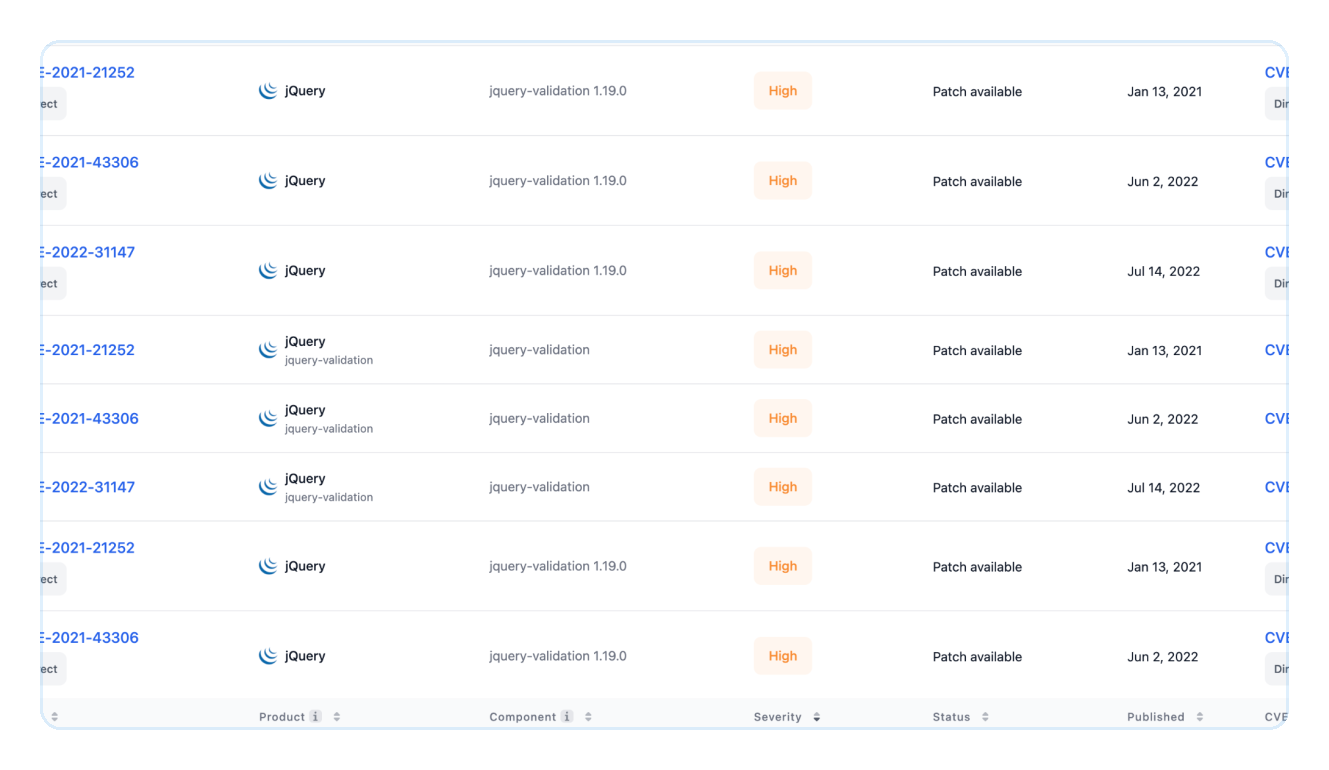
Every jQuery release before 3.5.0 ships with at least one unpatched cross-site-scripting CVE.
ELS closes that gap without forcing the jump to 4.x.
Three steps to a
patched jQuery
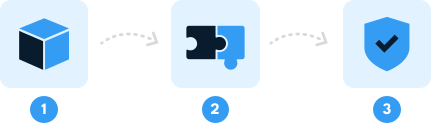
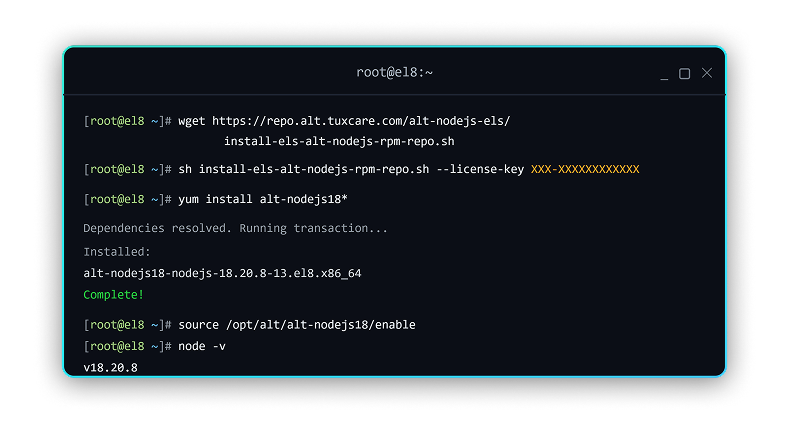
Add the TuxCare registry to .npmrc, swap the dependency (manually or with the Patcher), and refresh your install. Verify with npm list and run your app exactly as before.
Check out the documentation →What You Get with ELS

CVE Fixes for Out-of-Support jQuery
When a new jQuery vulnerability is disclosed, TuxCare investigates, patches, regression-tests, and ships a drop-in fix for the covered EOL branch so that a public CVE doesn’t mean an open exposure window for you.
 On day 1
ELS gives you access to existing fixes for known CVEs affecting your covered jQuery version.
See what’s already fixed →
Drop in.
Don’t rewrite.
ELS replaces the vulnerable jQuery file with a secured, version-matched equivalent. Your selectors, plugins, and DOM code behave exactly as before – no API changes, no .ready() surprises, no migration project.
ELS works across
CentOS, CloudLinux, Oracle Linux, AlmaLinux, Debian, Ubuntu, Alpine Linux, x86_64, and arm64
with a simple package-manager change.

Support That Holds Up to Review
SLA-backed patch delivery
TuxCare’s patch-delivery SLA helps you meet vulnerability-remediation expectations under SOC 2, NIS2, PCI DSS, HIPAA, DORA, and the CRA, with documented coverage you can show auditors.
Enterprise Support Guarantees
Commercial terms and contractual protections built for organizations that need more than best-effort community maintenance, informal timelines, or unsupported fixes from upstream projects.
Ask a jQuery CVE
patching expert
Talk to us about ELS coverage, implementation, compliance, or pricing for your jQuery-dependent applications.
Secure Legacy jQuery Without a Front-End Rewrite
Plug ELS into the stack you already have, keep the UI behavior your users depend on, and reduce security exposure while you plan modernization on your own timeline.
 No rushed rewrite.
 No forced framework migration
 No waiting for upstream fixes that will never come.
Compatible across:
 Debian
 Ubuntu
 CloudLinux
 AlmaLinux
 Oracle Linux
 Alpine Linux
A Head Start on jQuery Security
Adopt ELS and benefit from the fixes already delivered for covered jQuery versions,
plus continued patching as new CVEs appear.
How Does It Work?
We onboard new projects and enable 24/7 automated CVE tracking – monitoring the NVD, vendor, and GitHub security advisories, and other sources.
Once CVEs are detected, we backport upstream fixes using algorithmic and AI-assisted automation, with expert validation to ensure accuracy.

Patches are compiled in a binary format, extensively tested (for integrity, functionality, and regression), signed, and deployed to ELS repositories.
Your package managers, build tools, or orchestrators check for updates, then automatically pull and install them.
How Teams Use ELS

Close the CVE exposure window
⚠️ The bind:
A scanner flags vulnerable jQuery across public-facing sites, internal portals, and CMS-driven pages. The version is no longer maintained upstream, but replacing it could break UI behavior across business-critical workflows.
🔄 The turn:
ELS restores a vendor-backed patching path for covered jQuery versions. Security fixes are backported and tested so teams can reduce exposure without rushing a front-end rewrite.

Close an open audit finding
⚠️ The bind:
Internal audit, SOC 2, PCI DSS, or a customer security review flags unsupported jQuery in production. The team can’t point to an upstream fix, and the migration plan is too large to complete before the remediation deadline.
🔄 The turn:
ELS provides a supported, patched path for covered jQuery versions under commercial terms. Audit teams get a clear remediation story, and engineering gets time to modernize without breaking production.

Migrate on your terms, not the EOL clock
⚠️ The bind:
jQuery is woven through hundreds of pages, plugins, and vendored bundles. A rush to jQuery 4.x means breaking changes, removed APIs, and regression risk across code you don’t fully own – all to satisfy a scanner and close a compliance gap.
🔄 The turn:
ELS drops in across the whole front end with no behavioral changes, buying you years of runway to modernize deliberately while every version you still run stays secure, compliant, and stable.
Why TuxCare?
 420,000+
Patches Delivered
From the Team That Extends Open-Source Lifecycles
TuxCare keeps essential components protected long after upstream support ends, from the Linux kernel to front-end libraries like jQuery. One partner, whole-stack coverage.
 14,000+
Vulnerabilities Fixed
Founding platinum sponsor of the AlmaLinux OS Foundation and member of the Open Source Security Foundation (OpenSSF).
TuxCare invests in the open-source ecosystem it secures, from jQuery to Linux, and beyond.
Learn more → 70,000+
Packages Curated
 2,700+
Enterprise Clients
Related jQuery Insights
Still Rocking the Classics? A Pragmatist’s Guide to AngularJS Support in the Enterprise
See why AngularJS still powers mission-critical enterprise apps and how to keep it secure long after official support ends.

When Bootstrap Reaches End of Life: Keeping Your UI Secure Without Breaking Everything
Find out how to protect Bootstrap 3 and 4 applications from growing security risk without breaking the UI your users rely on.
Secure EOL Angular Apps without Rewriting: Getting Started with Endless Lifecycle Support
Learn how teams can keep legacy Angular apps patched, compliant, and production-ready without rushing into a risky rewrite.
Secure Your Unsupported jQuery Versions
Talk to our team about protecting legacy jQuery without forced rewrites, risky upgrades, or waiting on upstream fixes that are no longer coming.
Ask Us a Question
Frequently Asked Questions
Is it safe to keep using an old version of jQuery?
Only if that version is still receiving security fixes. Every jQuery release before 3.5.0 ships with at least one unpatched cross-site-scripting (XSS) CVE, and legacy versions get no upstream patches – so known vulnerabilities stay exposed indefinitely even when the site works fine. TuxCare Endless Lifecycle Support (ELS) closes that gap by delivering CVE fixes for covered unsupported jQuery versions.
How do I fix jQuery CVEs without rewriting my front end?
Replace the vulnerable jQuery file with a secured, version-matched equivalent instead of migrating frameworks. Your selectors, plugins, DOM logic, and UI workflows behave exactly as before – no API changes and no migration project. TuxCare ELS ships drop-in, regression-tested patches through a simple package-manager change, so a scanner finding doesn't become a front-end rewrite.
Why do scanners keep flagging jQuery even when my site works fine?
A working UI doesn't mean the library is secure – scanners flag older jQuery because it contains known CVEs with no upstream fix. The risk often spans public-facing pages, internal portals, and embedded third-party themes at once. ELS gives teams a patching path so those findings can be remediated instead of deferred or ignored.
Can I pass a SOC 2 or PCI DSS audit with legacy jQuery in production?
Audits require a remediation path for known vulnerabilities, which is hard to show when no upstream fix exists. A vendor-backed SLA gives auditors a named, accountable answer instead of "we plan to migrate eventually." TuxCare ELS provides SLA-backed patch delivery and commercial support terms aligned with SOC 2, PCI DSS, HIPAA, NIS2, DORA, and the CRA.
Which jQuery versions does TuxCare ELS support?
ELS covers unsupported releases including jQuery 1.8.2, 1.12.4, 2.2.4, and 3.4.1. These versions remain common in older web apps, vendor bundles, CMS themes, and customer-facing sites because they're embedded in code teams don't always fully own. Coverage lets you secure those instances without replacing every one immediately.
Do I have to upgrade to jQuery 4.x to stay secure?
No. Upgrading is one option, but it brings breaking changes, removed APIs, and plugin conflicts across code you may not fully own. ELS keeps your current version patched so you can modernize deliberately instead of rushing to satisfy a scanner. You get years of runway while every covered version you still run stays secure and stable.
Where does legacy jQuery risk usually hide?
It's often buried in CMS themes, plugins, admin dashboards, portals, checkout flows, and vendored bundles – code teams may not even own. That makes rushed replacement risky and easy to get wrong. ELS reduces the security exposure while those dependencies are identified and modernized over time, which matters most when jQuery is spread across many sites or business-critical workflows.