
 Tech Support
 Documentation
 Login
 Contact Us


Blog Series
TES

The Real Cost of Downtime...
When a retail site crashes, shoppers get frustrated. When a bank goes dark? The world stops. In the high-velocity world of FinTech, trust evaporates in seconds, and compliance alarms don’t...

The Hidden Cost of Scripted...
Key Takeaways: The real impact of scripted reboots isn’t the restart itself, but the coordination, workflow disruption, visibility gaps, and recovery effort that quietly compound across teams and systems. When...
The Future of Enterprise Linux:...
Key Takeaways: Enterprise Linux stability is increasingly driven by open collaboration rather than centralized vendor control. Transparency and predictable lifecycles are now essential requirements for enterprise trust, not optional features....

Why Healthcare IT Leaders Choose...
Key Takeaways: TuxCare Enterprise Support strengthens healthcare Linux security and uptime without reboots or workflow disruptions that could impact patient care. Automated patching and audit-ready reporting turn HIPAA, HITECH, HITRUST,...
HIPAA Security Rules for Linux:...
It surprises people when they first hear it, but Linux quietly powers a huge chunk of healthcare tech – EHR systems, lab platforms, research clusters, and even the random server...
The Hidden Downtime Cost of...
Key Takeaways: In healthcare, unpatched systems quietly drive downtime that delays care, strains clinicians, and can directly impact patient outcomes long before a security breach ever occurs. Patch management is...
Security Hardening for Community Linux:...
Key Takeaways AlmaLinux and Rocky Linux provide a strong foundation, but require hardening to close security gaps and enforce consistent configurations. Effective hardening includes least-privilege access, kernel and network tuning,...
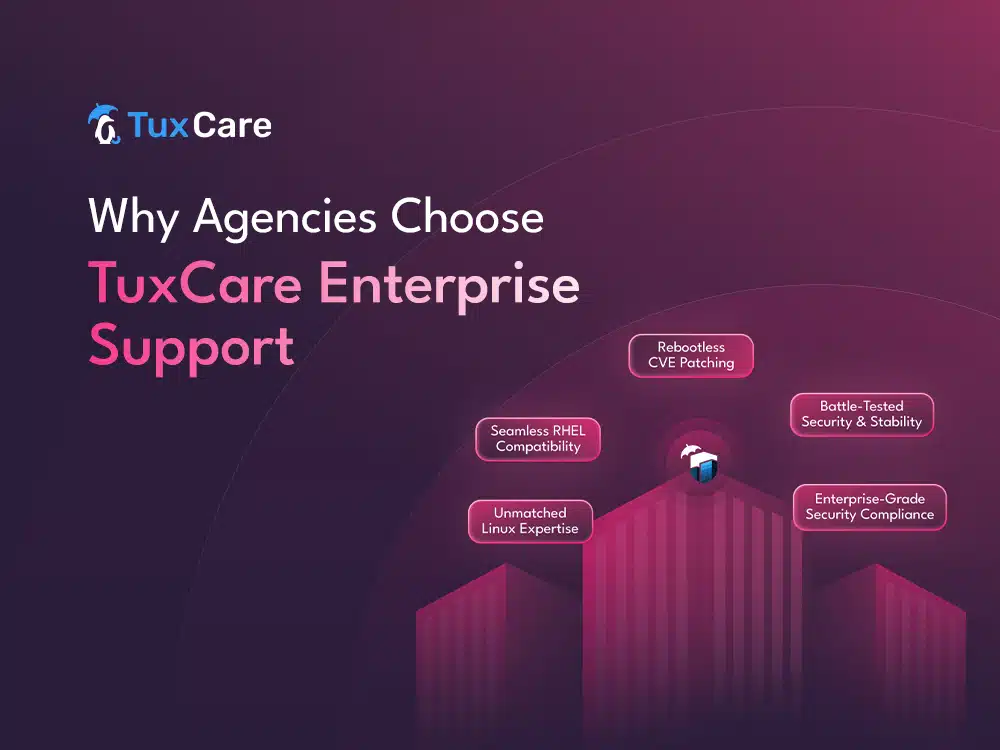
Why Agencies Choose TuxCare Enterprise...
Government agencies run some of the most important systems in existence – everything from public records and benefits portals to emergency communication networks. These environments can’t simply “go down for...