Tech Support
 Documentation
 Login
 Contact Us
Secured before it enters your stack – continuously until the end-of-life date.
All the ecosystem benefits. None of the blind trust.

SecureChain replaces the public npm registry with a curated, rebuilt-from-source repository. It vets every package at install, patches vulnerabilities as they emerge, and keeps your dependencies secure long after maintainers stop.



npm is the world's largest package registry.
It’s also the most exploited software supply chain in existence.
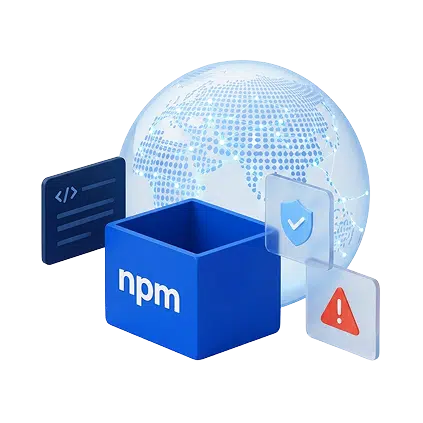
new malicious packages were identified across major open-source registries, with over 99% of them appearing on npm

A self-propagating malware campaign that spread through open-source ecosystems by hijacking trusted packages and silently infecting downstream environments.

A supply chain attack where a widely used HTTP library dependency was targeted, exposing how even trusted packages can become vectors for malicious code.

These aren't edge cases. They're the normal operating environment for any team building on Node.js.
Your exposure doesn’t come from one place. It comes from how npm works.
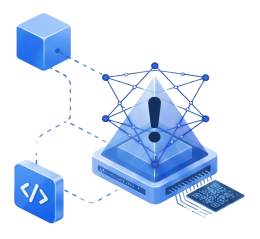

Every time your team runs npm install, they’re trusting a public registry.
That trust is frequently exploited.
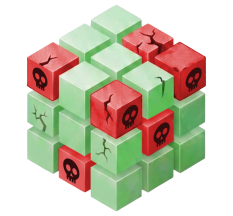

Every time your team runs npm install, they’re trusting a public registry.
That trust is frequently exploited.
Your application keeps running the same code – but the risk keeps increasing.
Most npm security tooling is limited to one phase of exposure.
A scanner that checks at install. A SCA tool that flags known CVEs.
An advisory feed that tells you something is vulnerable but doesn't fix it.
SecureChain is different because it's not advisory – it's active.
And it doesn't stop when the maintainer does.

for Open Source Software
From the moment you install a package – to long after maintainers stop.


All the ecosystem benefits. None of the blind trust.
Point your repository manager – or your package manager directly – to
SecureChain and keep working.
Same packages, same APIs, same workflow.
Compatible with:


Ask us how SecureChain verifies packages at install, patches vulnerabilities continuously, and protects your dependencies long after maintenance ends.
Ask Us a Question
With SecureChain, every package is:

Every package is rebuilt from source in hardened, isolated environments — no inherited binaries, no opaque upstream artifacts. What you install is what was built, verified end to end.

Every package is screened for known malware, suspicious code patterns, and supply chain risks. Anything that fails inspection is blocked before it reaches your environment.

Active components are monitored and patched under SLA as CVEs emerge. When upstream maintenance ends, Endless Lifecycle Support (ELS) keeps delivering fixes for as long as you depend on the package.

Know exactly what’s running and what’s been patched. SLSA Level 3 provenance, SBOM, and VEX deliver complete supply chain assurance — the evidence your auditors need on demand.
If a package you depend on isn’t in the catalog yet, we’ll add it
at no additional cost: verified, patched, and supported like every other.

Verified components at install, continuous protection after. No blind spots across the lifecycle.

No workflow changes. No forced rewrites when dependencies reach end-of-life.

Built-in SBOMs, VEX, provenance, and patch coverage – audit-ready by design.




Yes. npm packages can run lifecycle scripts like preinstall, install, and postinstall automatically during npm install. Attackers abuse this through typosquatting, hijacked maintainer accounts, tampered artifacts, and campaigns like Shai-Hulud. SecureChain analyzes packages before delivery and blocks malicious scripts or suspicious behavior before they reach your environment.
By default, you don’t. The public npm registry distributes published tarballs without proving they match the upstream source or build process. Clean-looking source can still produce a risky installable artifact. SecureChain rebuilds packages from verified source in hardened environments and provides SLSA Level 3 provenance, so each package is traceable and auditable.
Very large. One top-level npm package can pull in hundreds of transitive dependencies. Most are never reviewed, but each can execute code and expand your attack surface. SecureChain secures the full npm dependency tree, not just the packages you chose directly.
Use a trusted package source, not just scanners. SecureChain verifies npm packages before install, blocks malicious behavior, and continuously patches CVEs under SLA. This gives production teams a controlled, auditable source of npm packages.
No. SecureChain monitors npm packages for newly disclosed CVEs and delivers validated fixes aligned with your pinned versions. That reduces manual tracking, npm audit follow-up, and urgent upgrade pressure.
Risk increases. Unmaintained npm packages can stay in production while new vulnerabilities continue to appear. SecureChain is complemented by Endless Lifecycle Support (ELS), which backports critical fixes so you can stay secure without forcing an upgrade or refactor. When a package SecureChain maintains reaches end-of-life, ELS continues security coverage with no action needed on your side.
No. SecureChain works as a drop-in replacement for the public npm registry. Developers keep using npm, Yarn, or pnpm with the same commands and workflows. It can also be configured as an upstream source for JFrog Artifactory, Sonatype Nexus, and GitHub Packages.