Tech Support
 Documentation
 Login
 Contact Us
Secured before it enters your stack – continuously until the end-of-life date.
All the ecosystem benefits. None of the blind trust.



SecureChain replaces crates.io with a verified, rebuilt-from-source alternative. It vets every crate at install, continuously patches vulnerabilities, and keeps your Rust dependencies protected even after maintainers step away.



Rust reduces memory safety issues.
But supply chain risk operates outside the language itself.
Crates.io still depends on trust in publishers and distributed code.

A lookalike crate published to trick developers into installing a malicious dependency, highlighting the risks of name-based trust.

Abandoned crates with transferred ownership used to ship malicious updates under previously trusted names.

Memory safety doesn't extend to maintainers.
Risk follows how crates are published and consumed.
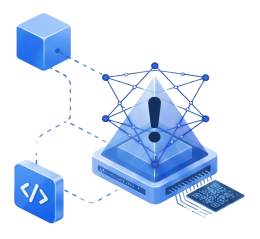

Every cargo build resolves dependencies from a public registry.
That trust can be abused.
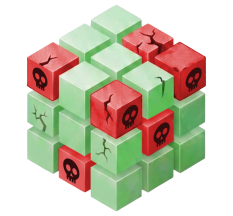

Every cargo build resolves dependencies from a public registry.
That trust can be abused.
Your builds stay the same – your exposure doesn’t.
Rust security is mostly what you assemble yourself.
The pieces don't add up to lasting coverage.
SecureChain does.
SecureChain is different because it's not advisory – it's active.
And it doesn't stop when the maintainer does.

for Open Source Software
From the moment you add a dependency – to long after maintainers stop maintaining.



All the ecosystem benefits. None of the blind trust.
Point your repository manager – or your package manager directly – to
SecureChain and keep working.
Same packages, same APIs, same workflow.
Compatible with:



Ask us how SecureChain verifies packages at install, patches vulnerabilities continuously, and protects your dependencies long after maintenance ends.
Ask Us a Question
With SecureChain, every package is:

Every package is rebuilt from source in hardened, isolated environments — no inherited binaries, no opaque upstream artifacts. What you install is what was built, verified end to end.

Every package is screened for known malware, suspicious code patterns, and supply chain risks. Anything that fails inspection is blocked before it reaches your environment.

Active components are monitored and patched under SLA as CVEs emerge. When upstream maintenance ends, Endless Lifecycle Support (ELS) keeps delivering fixes for as long as you depend on the package.

Know exactly what’s running and what’s been patched. SLSA Level 3 provenance, SBOM, and VEX deliver complete supply chain assurance — the evidence your auditors need on demand.
If a package you depend on isn’t in the catalog yet, we’ll add it
at no additional cost: verified, patched, and supported like every other.

Verified components at install, continuous protection after. No blind spots across the lifecycle.

No workflow changes. No forced rewrites when dependencies reach end-of-life.

Built-in SBOMs, VEX, provenance, and patch coverage – audit-ready by design.







Yes. Rust crates can run code through build.rs scripts and procedural macros during compilation. This code executes before your application runs and can perform unexpected actions. SecureChain reviews crate source code for build-time attack patterns, including malicious build.rs scripts and procedural macros, and blocks affected crates before they enter your toolchain.
Not by default. crates.io distributes crates without validating provenance or build behavior. SecureChain rebuilds crates from verified source and analyzes them before distribution to ensure integrity and safety.
Often larger than teams expect. Even small Rust projects can pull in hundreds of transitive crates. Each crate adds potential supply chain risk. SecureChain secures the full dependency graph, ensuring every crate is verified, scanned, and continuously patched.
You need visibility and control across the full Rust dependency graph. SecureChain verifies crates before use, blocks malicious ones, and continuously patches vulnerabilities, giving production teams a secure and maintainable Rust supply chain.
No. SecureChain monitors RustSec advisories and CVEs, then delivers validated fixes aligned with your dependencies. This reduces manual tracking and reactive update work.
Upstream typically patches only the latest release, so the older version you run can quietly stop getting security fixes. SecureChain keeps patching the version you run, with Endless Lifecycle Support once it reaches end-of-life.
No. SecureChain works as a drop-in replacement. Developers continue using Cargo commands and workflows without disruption.