Tech Support
 Documentation
 Login
 Contact Us




Go straight to an AI summary of this blog post instead 


Key Takeaways
- CentOS Linux is EOL: Your existing CentOS systems are no longer patched and are increasingly vulnerable.
- AlmaLinux is the modern alternative: It offers a stable, enterprise-grade OS that is compatible with Red Hat Enterprise Linux (RHEL).
- CentOS Stream is for developers: A rolling-release model upstream of RHEL — not suitable for stable, long-term deployments.
For CentOS Linux users, the challenge is twofold: securing legacy systems still running on an end-of-life OS — and choosing the right distribution for future workloads. With CentOS 7 support officially gone, the questions are: “How do I protect what’s still running?” and “What should I migrate to next?”
The short answer? When it comes to other community-powered Linux distributions, AlmaLinux is the ideal long-term replacement. But managing your existing CentOS infrastructure may require a phased approach.
In this guide, we compare AlmaLinux vs CentOS to help you make informed decisions for both legacy systems and new deployments.
AlmaLinux and CentOS: A Quick Overview
CentOS
CentOS is an open-source project behind the development of two Linux distributions, CentOS Linux and CentOS Stream.
CentOS Linux
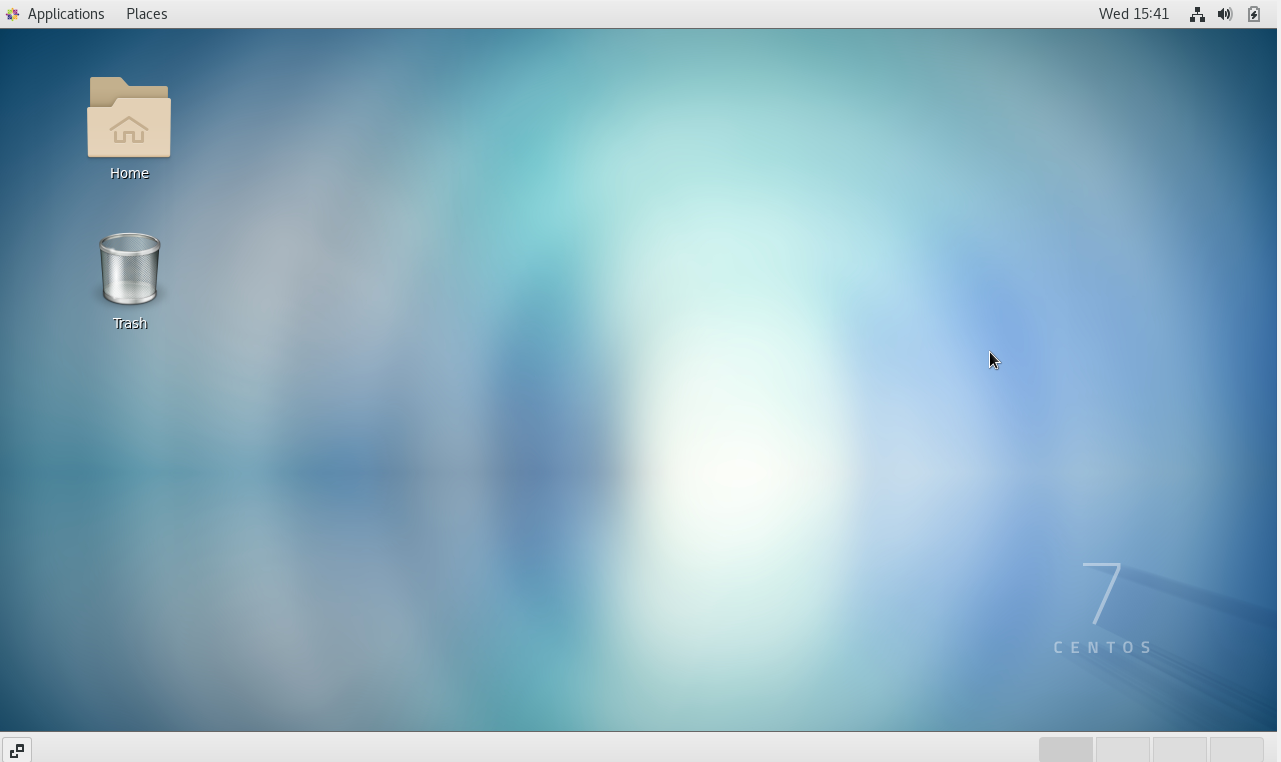
For over a decade, CentOS Linux has been the backbone for many enterprise and personal projects and is highly regarded for its stability and free downstream clone of Red Hat Enterprise Linux (RHEL). However, that era has officially ended with CentOS 7 reaching end of life in June 2024. Now, it no longer receives official security patches or bug fixes anymore, and — obviously — should never be considered for any new deployments. This woule be an even risker bet for the older ones versions.
CentOS Stream

After the announcement about the discontinuation of CentOS Linux, Red Hat repositioned CentOS Stream as the official CentOS project. Unlike its predecessor, CentOS Stream is a rolling-release distribution which acts as the upstream development branch for RHEL. In other words, it receives updates before RHEL, acting as a testing ground for newer features or the newer code to be tested.
For developers and contributors and those wishing to know what is next in RHEL, it is ideal; however, considering its very nature, it is a poor fit for a stable environment for mission-critical production with no fixed release schedules.
AlmaLinux

AlmaLinux emerged as a free, community-driven and enterprise-grade operating system, filling the gap that CentOS Linux left behind. It was created with a clear goal of providing a long-term, stable, and 1:1 binary-compatible replacement for RHEL. However, following changes in the RHEL ecosystem, AlmaLinux now focuses on maintaining application binary compatibility with RHEL. This means that software compiled for RHEL or RHEL clones runs seamlessly on AlmaLinux.
It is governed by the non-profit AlmaLinux OS Foundation and was initially backed by CloudLinux, the company behind CloudLinux OS. AlmaLinux has same qualities as CentOS Linux that users depended upon: stability and security, thus making it a suitable replacement for CentOS Linux. For businesses and sysadmins looking for a reliable production-ready alternative with long-term support options, the solution is AlmaLinux.
AlmaLinux vs CentOS: Core Differences
The table below provides a side-by-side comparison of AlmaLinux, CentOS Stream, and the now-EOL CentOS Linux.
|
Feature |
AlmaLinux |
CentOS Stream |
CentOS Linux (EOL) |
|---|---|---|---|
|
Release Model |
Point release (RHEL downstream) |
Rolling release (RHEL upstream) |
Point release (RHEL downstream) |
|
RHEL Compatibility |
Application Binary Compatibility (ABI), not 1:1 binary |
Not exact – ahead of RHEL |
1:1 binary-compatible |
|
Stability |
High, Enterprise-Grade |
Development-focused |
Stable, but no longer updated |
|
Support Lifecycle |
10 years per major release |
~5 years per major release |
Ended in 2024 (for CentOS 7) |
|
Updates |
Follows RHEL releases |
Continuous, as software packages are ready |
No official updates |
|
Community Backing |
AlmaLinux OS Foundation (non-profit) |
Red Hat-sponsored |
No longer active |
Pros and Cons of AlmaLinux And CentOS
Pros of AlmaLinux
Enterprise-Grade Stability: Built from the same stable source code as RHEL.
High RHEL Compatibility: Provides seamless Application Binary Interface (ABI) compatibility, ensuring that applications built for RHEL work without modification.
Long-Term Support: Offers a full 10-year support lifecycle for major versions, 5 years of active support and 5 years of security support.
Community-Owned: Backed by the nonprofit AlmaLinux Foundation, ensuring it stays in community hands.
Seamless Migration: Migrate easily from CentOS 7 using the ELevate project migration tool or from CentOS 8 using AlmaLinux’s official migration script.
Cons of AlmaLinux
Minor Version Lifecycle: Minor versions of AlmaLinux reach their end-of-life upon the release of the next version. AlmaLinux OS 9.5 reached its end of life when the AlmaLinux OS 9.6 is released.
Slower Updates: Newer software versions may take longer to arrive since all releases adhere to the schedule set after RHEL, while in a rolling-release OS, these versions are released much faster.
Not Very Bleeding Edge: Not the best choice if the developer requires the latest software packages and kernel versions.
Pros of CentOS Stream
Close to RHEL Development: Provides a continuous stream of updates, giving developers a preview of what’s coming in future RHEL releases.
Direct Influence: Allows users to contribute to the RHEL ecosystem and its further development.
Cons of CentOS Stream
Lack of Production Stability: Due to its rolling-release nature, bugs may be introduced, causing instability in systems and thereby making it unsuitable for mission-critical production environments.
Shorter Support Lifecycle: Receives support for around five years, which is a significant disadvantage for long-term projects.
You can also explore our detailed guide on CentOS Stream 9 EOL to understand its specific lifecycle timeline and support options.
Pros of CentOS Linux
Was a Free RHEL Clone: Provided a stable, enterprise-grade OS at no cost.
Cons of CentOS Linux
Extreme Security Risk: Without official security updates, the systems stand vulnerable to attacks.
Non-Compliant: Fails to meet modern security and compliance standards (e.g., PCI DSS, HIPAA) without extended support.
No New Deployments: Not considered for any new deployment, and must be phased out in existing deployments.
AlmaLinux vs CentOS: Use Cases
Now that you understand the key differences and pros/cons when it comes to support timeline limits, upstream sources, etc., the next step is to decide: which distribution is right for you?
When to Choose AlmaLinux
AlmaLinux definitely should be your choice for almost all enterprise use cases, with stability, security, and long-term support being crucial.
Production Servers: These include web servers, database servers, and application servers, where uptime and predictability are of utmost importance.
Enterprise Environments: Businesses that require a free, RHEL-compatible OS for compliance and standardized infrastructure.
Web Hosting Providers: Platforms that require a strong, reliable, and secure foundation to offer to their customers.
Migration from CentOS Linux: This is the most logical and seamless path for those looking to move from their now-EOL CentOS Linux systems.
When to Consider CentOS Stream
There is a specific niche that CentOS Stream fills and it differs from the strictly traditional CentOS Linux scenario.
RHEL-Focused Development: If you’re a developer or development team building and testing applications against the upcoming version of RHEL.
Contributing to the RHEL Ecosystem: If you want to engage in helping introduce features and fixes that will at some point land in RHEL.
Internal Testing: For organizations that want early look at what’s coming in RHEL to prepare for future migrations or updates.
What About CentOS Linux? The End-of-Life Reality
The discussion around AlmaLinux and CentOS Stream is a forward-looking one. But what about the countless servers still running on CentOS Linux 7? The hard reality is that with its end-of-life date in the past, these systems no longer receive official security updates from the CentOS project. This leaves them exposed to unpatched vulnerabilities and potential compliance violations.
This is where TuxCare’s Endless Lifecycle Support (ELS) service becomes essential. ELS delivers ongoing security patches for CentOS versions that have reached EOL, extending long-term support well beyond their official lifecycle. This helps businesses maintain security and compliance without the pressure of immediate upgrades, giving them the necessary time to plan and execute a smooth migration to a modern, RHEL-compatible distribution, such as AlmaLinux.
If you are looking to migrate from CentOS EOL to AlmaLinux, please check out our detailed CentOS Migration Guide that offers a complete walkthrough with step-by-step instructions and technical guidance.
How TuxCare Can Help
Whether you are managing a legacy CentOS environment or building a new infrastructure based on AlmaLinux, TuxCare will ensure security, compliance, and continuity.
Endless Lifecycle Support (ELS) for CentOS: Keep your end-of-life CentOS 6, CentOS 7, and CentOS 8 systems secure and compliant with ongoing security patches beyond their respective end-of-life dates. TuxCare’s ELS also supports CentOS Stream 8.
Enterprise Support for AlmaLinux: Get expert, 24×7 technical support, an endless lifecycle after the standard 10 years, FIPS compliance, and FedRAMP compliance for your AlmaLinux deployments.
KernelCare Enterprise: Apply critical security patches without a reboot to avoid downtime on Linux systems, including AlmaLinux and CentOS. This includes live patching for the Linux kernel and essential shared libraries like glibc and OpenSSL.
Contact our experts now to learn more about TuxCare solutions and how we can keep your Linux environment secure.