Tech Support
 Documentation
 Login
 Contact Us



Go straight to an AI summary of this blog post instead 


Financial institutions run on systems that simply aren’t allowed to blink. Payments, trades, account checks, fraud detection – all of it depends on infrastructure that has to stay available every second of the day. Even a brief hiccup can stall transactions, frustrate customers, and invite unwanted attention from regulators.
But here’s the tricky part: these same systems need constant security updates. Operating systems, shared libraries, communication layers – everything has to be patched as new vulnerabilities appear. And traditionally, patching meant downtime.
That leaves financial IT with a tough question:
How do you patch systems that can’t go offline?
Let’s walk through how banks and other financial institutions make it happen – and why zero-downtime patching has quietly become one of the most important capabilities in modern finance.
What Does “Patching Without Downtime” Actually Mean?
Patching without downtime – sometimes called rebootless or live patching – lets you apply security fixes while the system keeps running normally. No restart. No service interruption. No scrambling to find a midnight maintenance window.
For institutions that need to protect sensitive transactions or process payments continuously, this isn’t a nice-to-have. It’s essential to:
- prevent service disruptions
- maintain compliance
- avoid public incidents that damage trust
A recent report from the UK Treasury Committee showed just how much is at stake. Between 2023 and 2025, major banks experienced more than 803 hours of unplanned outages. One outage at Barclays alone resulted in £5–7.5 million in compensation. And those numbers don’t even touch the cost of lost trust.
Downtime has always been expensive. Now it’s a risk to reputation and regulatory standing, too.
Why Rebootless Patching Matters So Much in Finance
If there’s one constant in financial IT, it’s the pressure to stay online. The reasons are pretty simple:
Disruptions in Critical Operations
Even a few minutes of downtime can interrupt payments, delay transfers, or freeze customer access. In financial operations, time is money.
Customer Trust Erodes Fast
Customers expect their bank to work – always. A frozen transaction or unavailable account portal can leave a lasting impression, and not the good kind.
Regulatory Trouble
Standards like PCI DSS, SOX, and GDPR demand secure, reliable systems. If patching creates gaps or halts monitoring tools, compliance teams feel the shock first.
Massive Financial Loss
According to NetApp, downtime in banking can cost up to $6.48 million per hour.
Yes, per hour.
When patching requires a restart, these risks multiply. That’s where traditional maintenance workflows start to break down.
Why Traditional Patching Fails in Financial Systems
Financial infrastructure has its own set of challenges – and they don’t play nicely with downtime:
Legacy Applications
Older banking platforms often weren’t built for automation or modern patching tools. Updates have to be handled delicately.
Tight Maintenance Windows
Most institutions already compress patching into narrow windows. And every year, those windows shrink as demand grows.
Restart Requirements
Even short restarts can interrupt trades, batch jobs, or customer transactions.
Highly Complex Environments
A single institution might run:
- multiple Linux distributions
- bare metal servers
- virtual machines
- containers
- cloud workloads
Coordinating patches across all of it is like conducting an orchestra with half the instruments out of tune.
Pro tip: Choosing a platform with reliable rebootless-patching support – like AlmaLinux – helps teams apply updates consistently across mixed environments.
How Financial Institutions Actually Patch Without Downtime
Most teams use a combination of strategies to keep systems protected while staying online:
-
Rebootless Patching
Rebootless patching applies kernel and library updates while systems continue running – no reboot needed.
Tools like TuxCare KernelCare handle updates quietly in the background, closing vulnerabilities almost immediately while trading systems, payment engines, and databases keep working without interruption.
It’s one of the quickest ways banks reduce operational and compliance risk.
-
Automation & Orchestration
Automation brings structure to environments that are too complex to handle manually. With automation in place, teams can:
- deploy patches consistently
- reduce human error
- update hundreds (or thousands) of nodes at once
- coordinate patch timing across clouds, VMs, and containers
It also frees IT teams to focus on strategic improvements instead of chasing patch schedules.
-
Testing & Validation
Patches don’t just get pushed straight into production. They go through controlled testing first so that:
- compatibility issues are caught early
- updates don’t create new failures
- rollback options exist if something unexpected happens
KernelCare even makes rolling back a patch simple when needed – a valuable safety net in financial environments.
-
Monitoring & Compliance Integration
Automated monitoring and audit trails help institutions prove compliance without stopping services. This includes:
- logs of patch deployments
- evidence for PCI DSS or SOX audits
- tracking patch status across all systems
Zero-downtime patching only works if compliance teams can verify everything afterward.
Planning for a Zero-Downtime Patching Strategy
When institutions invest in continuous patching workflows, they usually focus on three areas:
Automation First
Automated patching reduces manual work, eliminates risky delays, and keeps systems consistent.
Unified Visibility
Centralized dashboards – like TuxCare’s ePortal – make it easy to track:
- patch status
- compliance posture
- system coverage
Governance Alignment
Patching workflows should match internal audit rules and external frameworks. A strong patching system supports compliance instead of tripping over it.
Solutions like TuxCare Enterprise Support bundle automated patching, monitoring, and reporting into one workflow – making zero-downtime patching not only possible but practical.
The Benefits Financial Institutions Gain from Automated, Zero-Downtime Patching
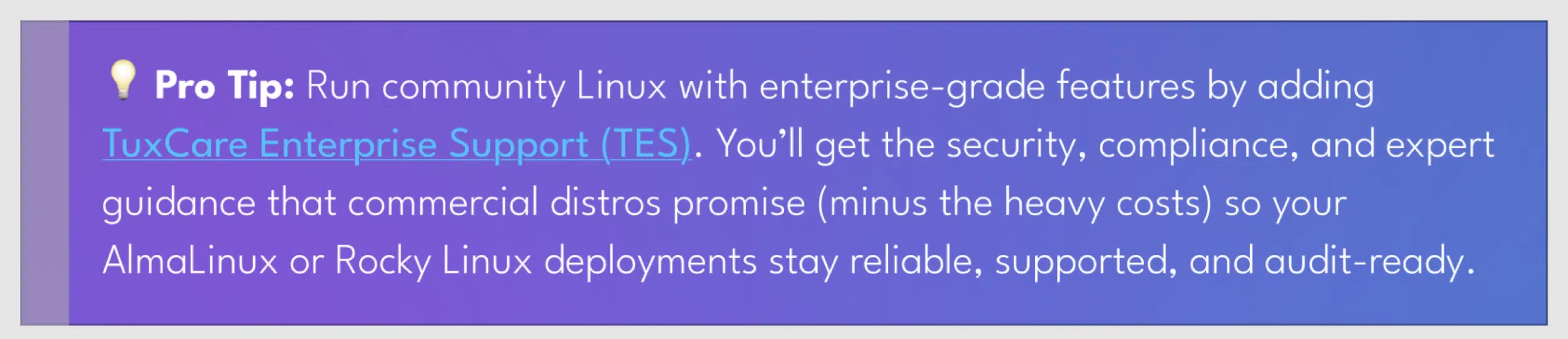
Here’s what organizations typically see once the strategy is in place:
| Benefit | What Automated Patching Delivers | Why It Matters in Financial Systems |
| Continuous Availability | Reboot-less security patches are applied to kernels using live‑patching tools. | Transactions, payments, and trading systems can remain online without scheduling windows. |
| Rapid Security Remediation | High and critical‑risk vulnerabilities addressed within 14 days of disclosure in supported minor releases. | The vulnerability window is minimized, reducing exposure to threats or compliance gaps. |
| Simplified Compliance | Built‑in audit logging, FIPS‑140‑3 support, and extended lifecycle updates for selected releases. | Helps meet standards such as PCI DSS, SOX, and ISO 27001 without disrupting operations. |
| Reduced Operational Overhead | Updates are automatically pulled and applied, and support includes vetted repositories and hourly support. | IT teams spend less time managing patch cycles and more time on strategic work. |
| Future‑Proof Stability | Support for AlmaLinux and Rocky Linux with at least 16 years of coverage and options to extend minor‑release lifecycles. | Legacy and heterogeneous environments can remain secure and supported without rush upgrades. |
Pro Tip: Choose a support solution with automated deployment and built-in compliance reporting. It turns patching from a fire drill into a background process.

Sustaining Uptime and Security Long Term
To build a future where patching never requires downtime, institutions focus on:
- monitoring key metrics like time-to-patch
- designing architectures with rolling updates
- embedding automation into daily workflows
- aligning patch rules with compliance frameworks
In financial IT, patching shouldn’t interrupt business – it should protect it quietly in the background.
With the right tools and strategy, zero-downtime patching becomes the new normal, not an aspiration.
And in the world of financial transactions, that difference matters more than ever.