
 Tech Support
 Documentation
 Login
 Contact Us


Go straight to an AI summary of this blog post instead 


Key Takeaways
- Enterprise visibility: Qualys VMDR and Rapid7 InsightVM deliver risk-based scanning, dashboards, and compliance reporting for large hybrid infrastructures.
- Cloud + DevSecOps: Wiz and Prisma Cloud excel at cloud-native workloads, containers, and CI/CD pipelines.
- SMB + endpoint focus: NinjaOne and Intruder offer lightweight scanning and simple remediation for smaller IT teams.
Vulnerability management tools are a broad category, but all have the same goal: helping organizations to minimize the risk posed by everyday IT vulnerabilities. Though every tool offers a different feature set, there are nonetheless common qualities – and desired qualities.
In this article, we outline 9 of the best vulnerability management tools in 2026 and what they can do for your organization. We also highlight key qualities to look for in a vulnerability management solution, based on our earlier survey results.
Quick Comparison: Best Vulnerability Management Tools in 2026
|
Tool name |
Standout capability |
Best for |
Price starting point |
|---|---|---|---|
|
Tenable Vulnerability Management |
Large plugin library with risk-based prioritization (VPR) |
Large enterprises needing broad asset visibility |
Annual Subscription Starts from $4900 / year |
|
Qualys VMDR |
Unified detection, prioritization, and response in one platform |
Enterprises with compliance and patch workflows |
Contact Sales |
|
Rapid7 InsightVM |
Context-based risk scoring tied to exploitability |
Security teams focused on risk reduction |
Contact Sales |
|
Wiz |
Agentless cloud visibility with attack-path analysis |
Cloud-native infrastructure teams |
Contact Sales |
|
Palo Alto Prisma Cloud |
Broad CNAPP coverage across build and runtime |
Cloud and container security teams |
Contact Sales |
|
Intruder |
Simple setup with external attack-surface scanning |
Small teams and SMBs |
Starting from |
|
Cisco Vulnerability Management |
Asset and risk correlation across network data |
Cisco-centric enterprise environments |
Contact Sales |
|
NinjaOne Vulnerability Management |
Vulnerability visibility integrated with endpoint management |
IT teams and MSPs |
Contact Sales |
|
Aikido Security |
Consolidated AppSec visibility across code and dependencies |
Developer-led teams and SaaS companies |
Starts around $400/month |
1. Tenable Vulnerability Management
Best for enterprise-wide vulnerability visibility

Tenable Vulnerability Management is a widely used platform for discovering, assessing, and prioritizing security risks across networks and systems. It provides comprehensive coverage for both Linux and Windows environments, with built-in reporting and compliance capabilities.
Tenable is particularly strong in large enterprise setting, where teams need centralized visibility across multiple locations, networks, and asset types. It integrates with cloud environments, SIEMs, and orchestration tools to streamline vulnerability workflows.
Key Capabilities
- Broad asset coverage: Assesses servers, endpoints, containers, and cloud workloads across multiple operating systems.
- Risk-based prioritization: Uses CVSS scores, exploitability data, and organization context to rank vulnerabilities.
- Compliance reporting: Supports common regulatory and security frameworks, including PCI DSS, HIPAA, and CIS benchmarks.
- Integration-ready: Works with ticketing, patch management, and security orchestration platforms to automate workflow.
Where Tenable Shines
- Enterprise scale: Handles large, distributed IT environments efficiently.
- Cross-platform support: Provides coverage for Linux, Windows, and cloud workloads.
- Compliance focus: Built-in, audit-ready reports reduce manual effort.
Where Tenable Falls Short
- Linux-specific depth is limited: Unlike Linux-focused tools, some Linux CVEs may require filtering or extra validation.
- Complex setup: Initial deployment and configuration can be resource-intensive for smaller teams.
Who Tenable Is Best For
- Enterprise security teams managing thousands of assets across multiple OSs
- Compliance teams needing audit-ready reporting for regulatory requirements
- Organizations with hybrid IT or cloud environments requiring centralized visibility
You can also learn more about evaluating leading enterprise vendors in our detailed round-up of vulnerability management service providers.
3. Qualys VMDR
Best for cloud and hybrid environments with continuous vulnerability coverage
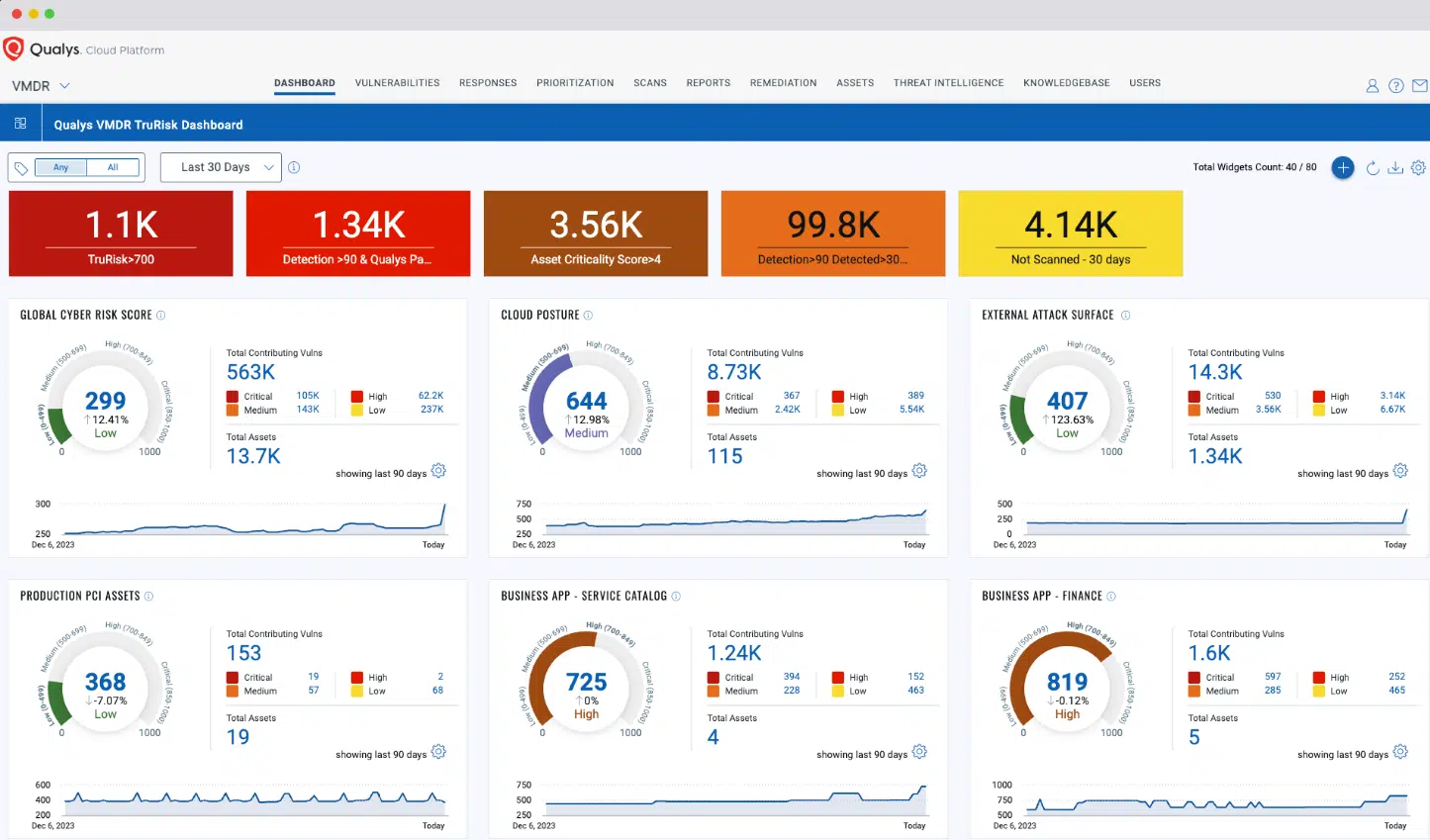
Qualys VMDR is a cloud-based vulnerability management platform that combines discovery, assessment, and remediation workflows. It provides continuous vulnerability assessment across on-premises, cloud, and container environments, providing actionable insights and prioritization for security weaknesses.
VMDR integrates with patch management systems, SIEMs, and orchestration tools to streamline remediation, while also providing audit-ready reports to support compliance efforts. Its cloud-first design allows teams to scale quickly without managing complex on-prem infrastructure.
Key Capabilities
- Continuous vulnerability detection: Provides frequent, agent-based and sensor-driven vulnerability assessment across systems, applications, and cloud workloads.
- Automated prioritization: Uses severity, exploitability, and threat intelligence to rank vulnerabilities for remediation.
- Integrated patching workflows: VMDR connects with patch management tools to reduce the time between detection and remediation.
- Comprehensive reporting: Generates customizable dashboards and audit-ready reports for stakeholders.
Where Qualys Shines
- Cloud and hybrid visibility: Covers cloud workloads, containers, and on-prem systems seamlessly.
- Scalability: Cloud architecture allows quick deployment and expansion.
- Audit and compliance reporting: Reduces manual work for compliance reporting.
Where Qualys Falls Short
- Linux-specific depth is moderate: Linux-focused vulnerability workflows may require additional tuning compared to Linux-first tools.
- Pricing can be high for smaller teams: Cloud subscription costs can add up depending on asset count and modules selected.
Who Qualys VMDR Is Best For
- Cloud and hybrid IT teams managing multi-cloud workloads and on-prem assets
- Security operations teams needing continuous detection and remediation workflows
- Organizations requiring centralized reporting and compliance support
4. Rapid7 InsightVM
Best for risk-based vulnerability management with actionable remediation

Rapid7 InsightVM is a vulnerability management platform designed to help security teams identify, prioritize, and remediate software vulnerabilities across on-premises, cloud, and hybrid environments. InsightVM emphasizes risk-based vulnerability management, highlighting the software weaknesses that pose the greatest real-world threat to the organization.
It integrates with patch management, ticketing, SIEM, and orchestration tools to streamline remediation and supports audit-ready reporting for regulatory requirements. The platform also provides dynamic dashboards to track remediation progress and risk trends over time.
Key Capabilities
- Risk-based prioritization: Uses threat intelligence, exploitability data, and CVSS scores to focus on the most critical vulnerabilities.
- Live dashboards: Offers near real-time visibility into asset exposure and remediation progress.
- Integration-ready: Connects with patching, ticketing, and SIEM tools to automate vulnerability response workflows.
- Dynamic asset discovery: Continuously identifies and profiles new assets in the environment.
Where Rapid7 Shines
- Risk-focused approach: Helps teams prioritize the software vulnerabilities that matter most.
- Real-time visibility: Dashboards show progress on remediation and exposure trends.
- Continuous discovery: Identifies new assets as they are added to the environment.
Where Rapid7 Falls Short
- Linux-specific coverage is not as deep: While Linux is supported, the tool may require extra filtering for Linux-focused CVE management.
- Complexity for smaller teams: Setup and configuration can be challenging for organizations without dedicated vulnerability management staff.
Who Rapid7 InsightVM Is Best For
- Security operations teams managing risk across diverse IT environments
- Organizations with hybrid IT needing real-time visibility and prioritization
- Teams focused on remediation efficiency that want actionable, risk-based insights
5. Wiz
Best for cloud‑native vulnerability insight and IT infrastructure risk visibility
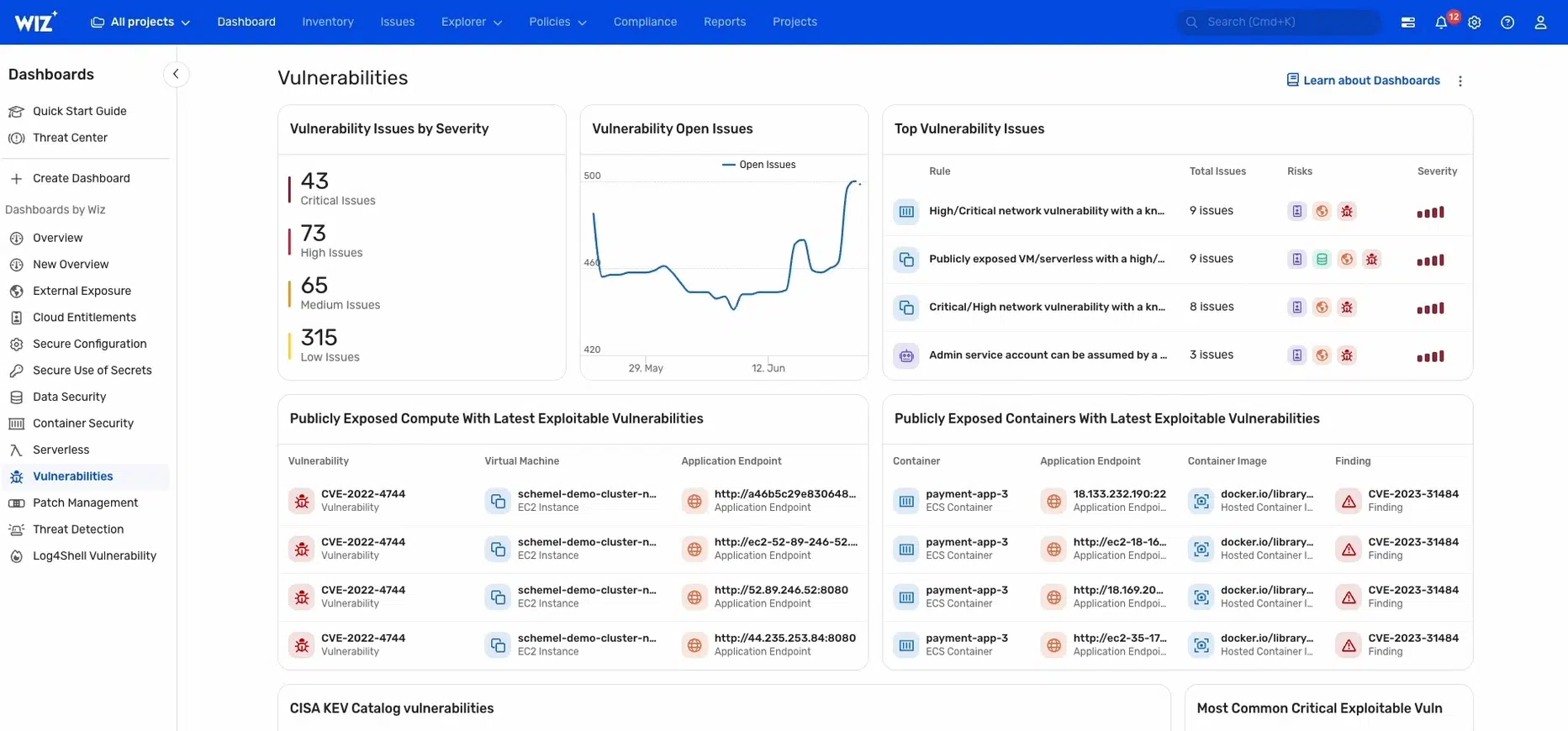
Wiz is a vulnerability and risk management platform built for cloud‑native environments. It discovers vulnerabilities across cloud workloads, containers, and infrastructure‑as‑code setups while mapping risk to running applications.
Wiz aims to help security teams understand why a vulnerability matters now, not just that it exists. It combines vulnerability data with context about runtime exposure, cloud configurations, and identity risk to give a fuller view of security posture.
Key Capabilities
- Cloud‑native scanning: Detects software weaknesses in cloud workloads, containers, and infrastructure-as-code configurations.
- Risk context mapping: Connects vulnerabilities to runtime threats and configuration risk.
- Integration‑ready: Works with CI/CD tools, cloud providers, and orchestration systems for continuous visibility.
- Unified risk view: Brings together workload, configuration, and identity risk in a single dashboard.
Where Wiz Shines
- Cloud‑native focus: Excels at finding vulnerabilities across cloud infrastructure and related workloads.
- Contextual risk mapping: Helps teams understand which issues are exploitable today.
- Scales with DevSecOps: Fits modern CI/CD practices and cloud pipelines.
Where Wiz Falls Short
- Less focus on traditional on‑prem Linux: Depth for on‑prem Linux systems may be limited compared to Linux‑first tools.
- Pricing complexity: Broad module options can make cost estimation harder for new users.
Who Wiz Is Best For
- Cloud security teams supporting multi‑cloud and container estates
- DevSecOps teams needing context‑aware insight in CI/CD workflows
- Organizations seeking unified views of risk across cloud infrastructure
6. Palo Alto Prisma Cloud
Best for cloud-native vulnerability and risk management
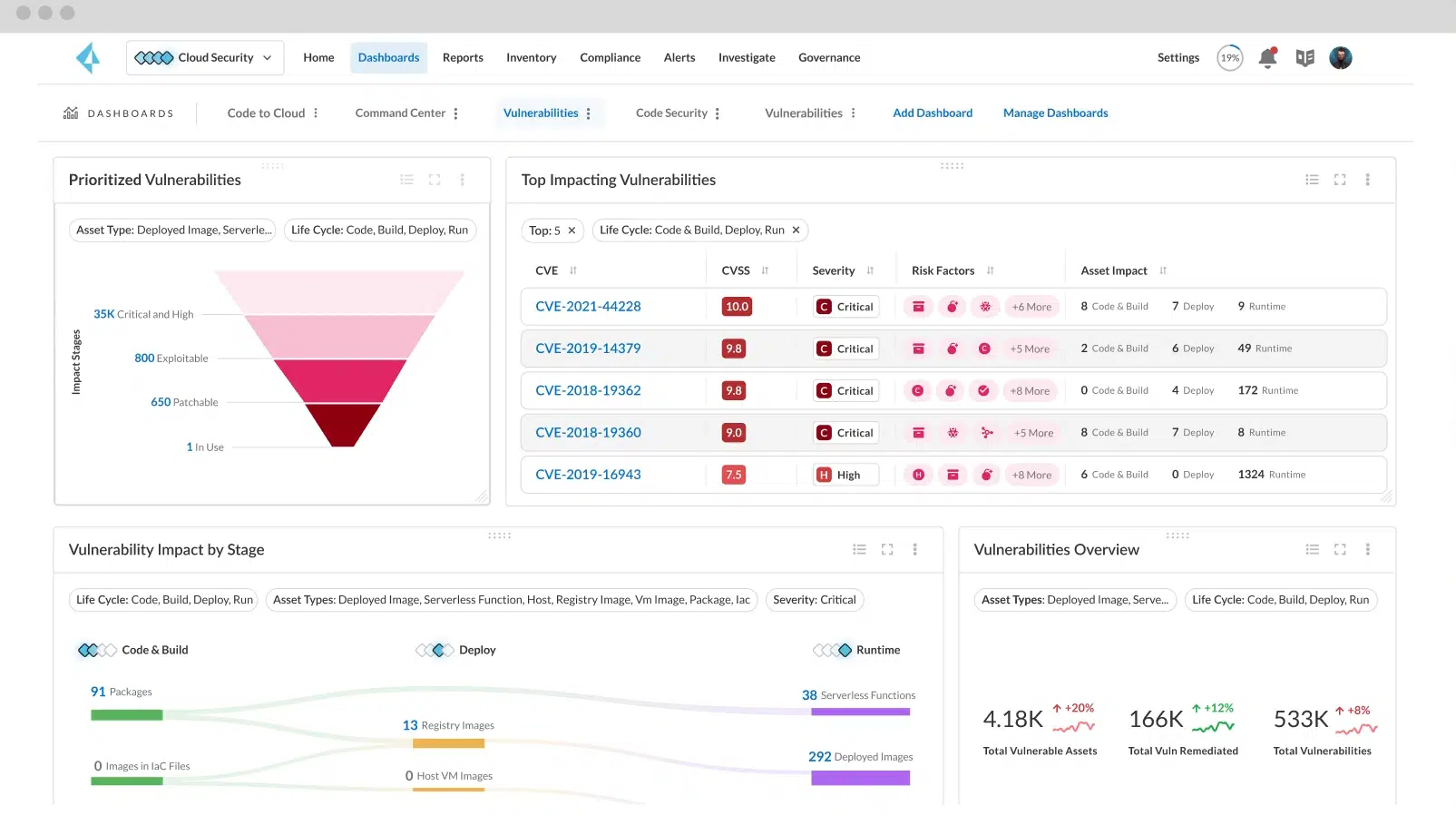
Prisma Cloud provides vulnerability management and security posture monitoring for cloud environments, containers, and serverless workloads. It identifies risks across cloud infrastructure, configurations, and deployed workloads, helping teams prioritize remediation based on real-world impact. The platform also integrates with CI/CD pipelines and cloud service providers to support continuous security.
Key Strengths
- Cloud-native coverage: Monitors cloud workloads, containers, and serverless functions.
- Unified risk view: Combines vulnerabilities, configuration issues, and compliance gaps in a single dashboard.
- Integration-ready: Works with CI/CD pipelines, cloud providers, and orchestration tools for automated remediation.
Where Prisma Cloud Falls Short
- Not Linux-first: While Linux is supported, vulnerability visibility is cloud-context focused rather than distribution- and patch-aware.
- Complex setup: Requires planning and configuration, especially for multi-cloud deployments.
7. Intruder
Best for lightweight vulnerability scanning and DevSecOps workflows

Intruder is a cloud‑based vulnerability scanner that helps teams find security issues on networks and systems. It combines automated scans with clear results and suggested fixes. Intruder works well for teams that want a simple way to spot common vulnerabilities and track them over time.
Key Strengths
- Fast setup: Scans can start quickly with minimal configuration.
- Clear results: Simple dashboards and guidance help teams understand findings.
- DevSecOps friendly: Integrates with tools often used in development pipelines.
Where Intruder Falls Short
- Not a full VM platform: Focus is on scanning and reporting, not full lifecycle management.
- Not Linux-first: Linux coverage is solid for common CVEs, but it is not focused on deep Linux-specific detection.
If you are considering lightweight or community-driven options, you can check out our guide to open-source vulnerability scanners.
8. Cisco Vulnerability Management
Best for enterprise networks with Cisco devices
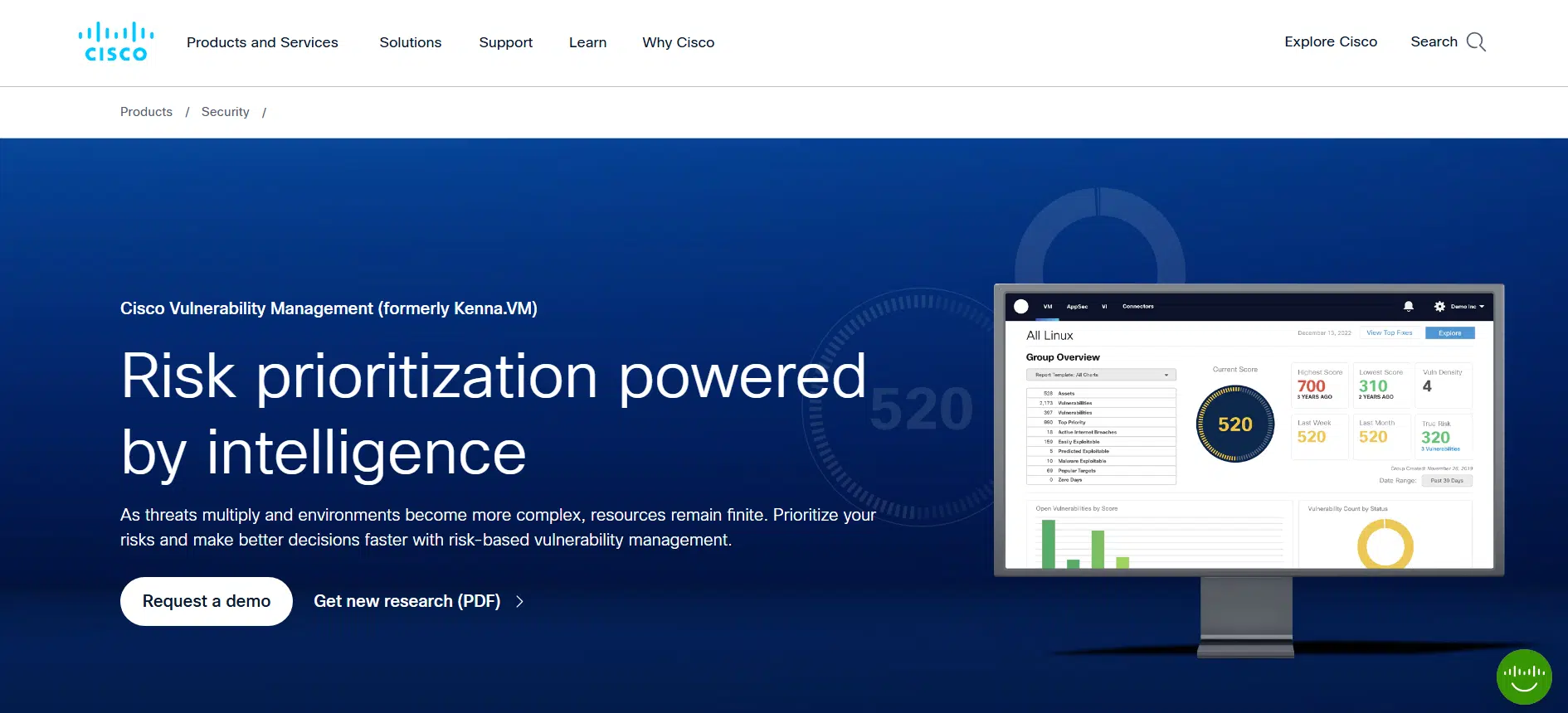
Cisco Vulnerability Management helps organizations identify and prioritize vulnerabilities across Cisco network devices, endpoints, and connected systems. It is especially useful for environments heavily using Cisco hardware and software, providing continuous monitoring and actionable insights for remediation.
Key Strengths
- Cisco ecosystem integration: Works seamlessly with Cisco devices, routers, switches, and security appliances.
- Centralized visibility: Provides a consolidated view of network vulnerabilities.
- Prioritization: Focuses on vulnerabilities that pose the greatest risk to your environment.
Where Cisco VM Falls Short
- Limited non-Cisco coverage: Best results are achieved in Cisco-heavy networks.
- Complex setup: May require dedicated network security teams for deployment and configuration.
9. NinjaOne Vulnerability Management
Best for SMBs and IT teams managing endpoints efficiently

NinjaOne Vulnerability Management helps IT teams discover, assess, and remediate vulnerabilities across endpoints and servers. It focuses on simplicity and automation, allowing teams to track vulnerabilities, deploy patches, and maintain compliance without complex configurations.
Key Strengths
- Endpoint-focused: Designed for desktops, laptops, and servers in small to medium-sized businesses.
- Automation: Provides automated patching workflows and alerting.
- Ease of use: Simple dashboards and guided remediation make it easy to manage vulnerabilities.
Where NinjaOne Falls Short
- Limited enterprise scale: May not be ideal for large, distributed environments.
- Linux depth is moderate: Linux coverage exists but is not as extensive as endpoint-first tools focused on Linux servers.
10. Aikido Security
Best for mid-market teams that want fast remediation guidance
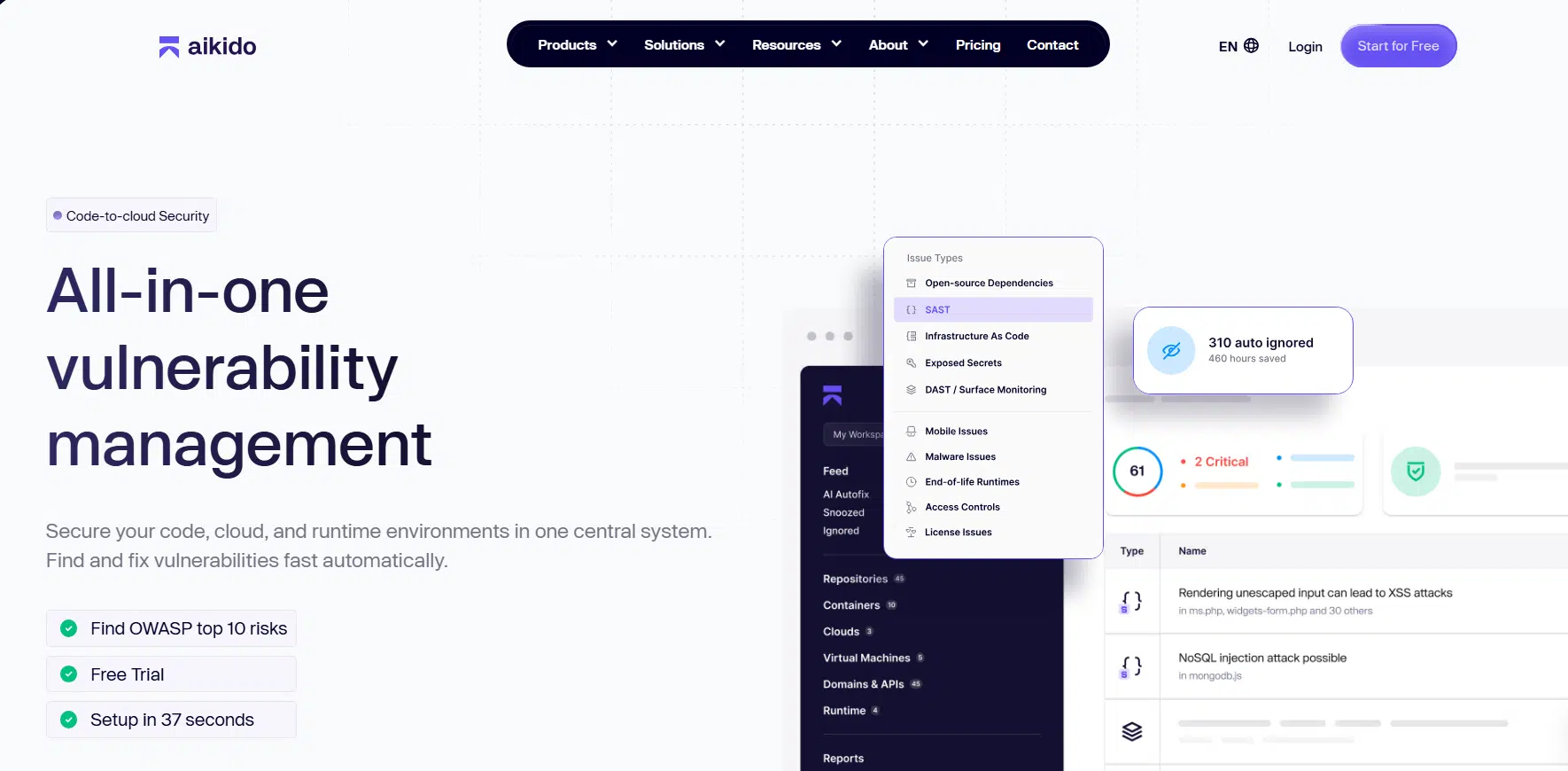
Aikido Security is a vulnerability management platform designed to help teams discover, prioritize, and remediate security risks across servers and applications. It focuses on providing actionable guidance to reduce remediation time and improve overall security posture.
Key Strengths
- Actionable insights: Offers clear guidance for fixing vulnerabilities quickly.
- Prioritization: Highlights the most critical vulnerabilities based on risk.
- Reporting: Generates audit-ready reports for compliance and stakeholder visibility.
Where Aikido Falls Short
- Smaller scale: Best suited for mid-sized environments rather than large enterprises.
- Linux coverage is limited: Linux coverage is not as deep as Linux-first scanners.
How to Choose the Right Vulnerability Management Solution
Choosing a vulnerability management solution is less about picking a popular tool and more about understanding how vulnerabilities move through your organization.
Most tools can scan and produce findings. Fewer can help teams act on those findings in a way that fits real operations. The right solution should support how your engineering, security, and operations teams already work – not force a new process that adds friction.
It also helps to separate vulnerability assessment from vulnerability management. Assessment finds issues, whereas management covers prioritization, remediation, tracking, and reporting over time. That’s also where vulnerability patching becomes critical – turning findings into timely fixes you can roll out safely and consistently, alongside hardening layers like a properly configured Linux firewall that limits exposure between patch cycles.
Finally, scale matters. A solution that works for a small environment may break down as asset count grow, patching windows shrink, or compliance pressure increases. The best tools support automation, transparency, and controlled rollout, without disrupting availability.
Features that Should Be Present in the Ideal Vulnerability Management Tool
In our survey on the State of Enterprise Vulnerability Detection and Patch Management in the enterprise, respondents pointed to features that users would like to see in vulnerability management software – many of which are focused on the more practical aspects of vulnerability management.
In that same report, 75% of respondents said they rely on manual online research to understand vulnerabilities. This highlights how many teams still lack automated guidance and prioritization.
Rapid and rebootless patch rollout
Users want a quick reaction to new CVEs. In other words, the ideal vulnerability management tool needs to roll out patching as fast as it is released – or perhaps even supply a custom patch to ensure a rapid response. Rebootless patching – the ability to patch without restarting or rebooting a service – was also a desired feature.
Complete and automated reporting
Most VM tools provide some reporting, but users want broad, comprehensive reports that deliver real insights, including clear vulnerability metrics they can track over time. Reporting should be automated and easy to interpret.
You can also explore our detailed guide on vulnerability management metrics to see which key indicators matter most for your security reporting.
Comprehensive logging
Tools that have the capacity for automatic remediation will inevitably make changes to your systems. Comprehensive logging that describes these changes can help sysadmins debug errors should something go wrong.
Limited impact on system resources
Users remain concerned about the load vulnerability management tools place on systems. Best-in-class tools minimize impact on resources while performing scans and patches.
Phased rollouts
Some users prefer phased patch deployment, where patches are first applied to test systems to ensure they do not disrupt operations, and then gradually rolled out to remaining systems to reduce risk.
Detection of backported fixes
Backported fixes – patches applied without updating the version number – can trigger false positives in VM tools. An ideal tool can detect these and avoid unnecessary alerts.
High levels of automation
Beyond scanning, effective tools should automate prioritization and mitigation, reducing manual effort.
Balancing availability and security
VM tools should protect systems without disrupting critical services, balancing security needs with uptime.
Automation Is at the Core of a Good Vulnerability Tool
Vulnerability management tools are a core part of your security program. Mitigating vulnerabilities reduces the opportunities attackers have to exploit gaps in your defenses.
The more you can automate, the more time your security teams can spend on strategic work. However, automation should not come at the price of opacity. A good tool should be transparent in how it works.
You can read the State of Enterprise Vulnerability Detection and Patch Management report (2021) here. If you want to learn how rebootless patching can reduce manual work and improve security, check out TuxCare’s rebootless patching solutions.

