
 Tech Support
 Documentation
 Login
 Contact Us




Go straight to an AI summary of this blog post instead 


In the world of open source, we often find ourselves playing a high-stakes game of whack-a-mole (remember those Chuck E. Cheese trips as a kid?). We identify a vulnerability in a specific framework like Angular v15 or Vue v2.7.16, apply a patch, and move on. But while we’ve secured one door, the rest of the house remains wide open. Focusing solely on language-specific patching creates a false sense of security that leaves organizations vulnerable to the broader, often unseen risks in modern software ecosystems.
Open source is estimated to make up roughly 70–90% of the code in modern applications. When you’re managing a production stack, you aren’t just using “a language”; you’re operating within a whole ecosystem like JavaScript (npm) or Python (PyPI). And those ecosystems are often hiding the next attack you haven’t even anticipated yet.
The Problem with “Picking and Choosing”
When teams focus only on patching high-profile libraries, say, only securing Angular v15 while ignoring the hundreds of other dependencies in the npm registry, like rxjs, they create significant blind spots. Supply chain attacks, such as typosquatting, dependency confusion, malicious install scripts, and tampered artifacts, are now the norm. These attacks don’t always target the flavor of the week in your stack; they target the weakest link.
By covering the whole ecosystem with SecureChain, you cover all your bases instead of picking and choosing which specific library to patch. Think of SecureChain as a dome of armor around the whole ecosystem of packages you pull in. It drastically cuts the risk of missing a critical vulnerability simply because it wasn’t on the “priority list” for that month.
The Transitive Problem
When you install a package via npm or another package registry, you’re inherently bringing in EVERYTHING… well, mostly everything that the package relies on. If you look at the package.json in your project, you’ll see a list of your direct dependencies (the full transitive tree lives in your package-lock.json). Though your mileage may vary, it should look something like this:
"dependencies": {
  "@angular/common": "^20.3.0",
  "@angular/compiler": "^20.3.0",
  "@angular/core": "^20.3.0",
  "@angular/forms": "^20.3.0",
  "@angular/platform-browser": "^20.3.0",
  "@angular/router": "^20.3.0",
  "rxjs": "~7.8.0",
  "tslib": "^2.3.0",
  "zone.js": "~0.15.0"
}
These top-level packages are still supported, so critical patches will come from the maintainers. I’d still suggest pinning the versions by removing the carets (^) and tildes (~) to avoid surprise updates. Just keep in mind this only pins your direct dependencies; committing your package-lock.json (and using npm ci in your pipelines) is what actually locks down the full tree. The real risk sits deeper, though. If we navigate to the rxjs package in the node_modules folder and open its package.json, we can see a transitive dependency in action:
"dependencies": {
  "tslib": "^2.1.0"
}
The Package Problem
If we’re building an Angular app and want to use Lucide within it, we have to go to npm to install it. At this point, it becomes a direct dependency. You can use Lucide with any of these JS libraries/frameworks:
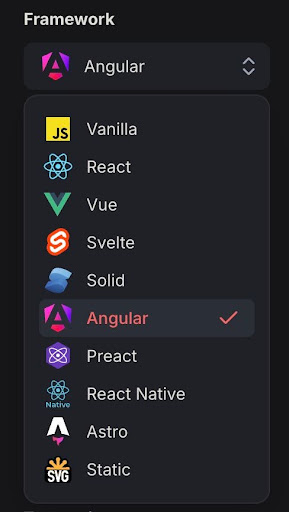
Lucide is an open source icon library that provides 1,600+ SVG icons to use in your projects. This is what language-specific patching looks like in practice: you install Lucide, and if a vulnerability pops up, now you have to find the patch and implement it yourself. The focus is on the individual package, not the ecosystem, as a patching and securing strategy. (At the time of writing, npm audit reports no known vulnerabilities for @lucide/[email protected], though a clean audit only covers publicly disclosed advisories.)
The DX Workflow
One of the biggest obstacles to maintaining secure systems is the friction it causes for developers. Manual patching often involves jumping into documentation, copying dependency lines, and deleting node_modules and package-lock.json just to reinstall with npm install, then crossing our fingers and hoping nothing breaks. npm install will fix everything, right? Not quite.
The Ecosystem Fix
We know at some point or even right from the beginning stages of our project we are going to use Lucide as our icon library. Wouldn’t it be great if we could pull that in along with any other JS package, including whatever flavor of JS library or framework we want, pre- or post-EOL (end-of-life)? Everything in npm under one vetted, malware-tested, protected roof? You can with SecureChain.
SecureChain protects the whole ecosystem of packages (including transitive dependencies) rather than working on a per-language or per-framework basis. Remember the transitive dependency problem from above? Now all your direct and transitive dependencies can be secured and cut off from the public supply chain, so existing and newly discovered vulnerabilities are far less likely to ever reach your project.
Ecosystem protection provided by SecureChain works across the stack. It doesn’t matter if you’re building your app with Python, Java, JavaScript, PHP, Go, or Rust – SecureChain cuts off supply chain vulnerabilities and keeps your app secure before and after its components go end-of-life.
Ecosystem-wide protection through SecureChain shifts the headache. For a developer, this means:
- No Language Juggling: You don’t need to worry about the specific nuances of every framework/library or package you use; if it’s in a given ecosystem, it falls under the same protection.
- Same Tools, Same Workflows: SecureChain is a drop-in solution. Point your package manager at it once, and your builds and pipelines carry on as before. You continue using the tools you know, like npm, PyPI, etc., while TuxCare handles the supply chain risk in the background.
- Reduced Context-Switching: By automating the dependency replacement and installing patched packages directly, developers can stay in their flow.
Extensive Protection from Install to EOL
SecureChain redefines open source security by providing a trusted adoption layer combined with uninterrupted operational security. This isn’t just about applying a patch; it’s about the entire lifecycle of the package:
- Verified Sources: Every package is reconstructed from verified source in a controlled environment and scanned for known malware.
- Continuous Patching: As new CVEs emerge, TuxCare engineers continuously patch packages, using upstream fixes or contributing our own when upstream falls short.
- Pre/Post EOL Support: Coverage starts before a package reaches end-of-life and continues past it, closing a critical gap for organizations relying on legacy frameworks.
Closing Thoughts
Focusing on a single language, framework, or package is like locking your front door but leaving the windows wide open. By moving toward an ecosystem-wide approach with SecureChain, you move from reactive “whack-a-mole” patching to a proactive, all-in-one security picture. It simplifies life for the developer, hardens the supply chain, and keeps your production stack secure long after the vendors and community have moved on.