Tech Support
 Documentation
 Login
 Contact Us


Go straight to an AI summary of this blog post instead 


Key Takeaways
- Cloud environments face evolving threats such as misconfigurations, insecure APIs, and identity and access management.
- Despite years of cloud adoption, many organizations still lack a clearly defined cloud security architecture.
- Organizations can implement the KernelCare rebootless patching tool to protect their cloud-based Linux systems without downtime.
While operating in a cloud environment offers tremendous flexibility, scalability, and efficiency, it also comes with risks that every organization must understand. Even with strong cloud security frameworks in place, new risks continue to emerge.
In this article, we’ll cover the top cloud security threats you should be watching out for –from credential theft and system vulnerabilities to misconfigurations and accidental data exposure. Don’t worry; we’ll also outline practical measures to help you strengthen your defenses and protect valuable data in the cloud.
What Are Cloud Security Threats?
Cloud security threats refer to vulnerabilities, risks, or malicious activities that target cloud environments, where data, applications, and infrastructure are hosted on shared platforms.
Cloud computing operates on a shared responsibility model between provider and customer. Breaches often occur when organizations neglect their share of that responsibility – for example, by failing to secure configurations, credentials, or software dependencies.
Attackers exploit weaknesses in different areas, such as Identity and Access Management (IAM), improperly configured resources, insecure application programming interfaces (APIs), and outdated systems, to gain unauthorized access or disrupt normal cloud operations. These risks must be carefully considered when designing a strategy to mitigate cloud security threats.
13 Cloud Security Risks to Be Aware of
Cloud security risks can be both damaging and difficult to detect. Below are some of the most critical cloud security threats every organization should understand and guard against.
1. Cloud misconfiguration and inadequate change control
Cloud misconfiguration and inadequate change control can leave systems and data vulnerable to attacks.
Misconfigurations can occur when cloud resources are not configured properly, or when security controls are not implemented correctly. This can result in unintended exposure of data, insecure network configurations, or unauthorized access to resources.
Inadequate change control can also lead to misconfigurations and vulnerabilities, as changes to cloud environments are not properly vetted or tested. This can leave systems open to attacks or cause unexpected downtime. Therefore, it is critical to ensure that cloud environments are properly configured and that changes are carefully managed to mitigate these risks and minimize these types of threats.
CSA Insight: The CSA 2024 report ranked misconfiguration and inadequate change control as the #1 cloud threat, up from third place in 2022. The shift reflects the growing complexity in multi-cloud environments where one small configuration error can expose entire workloads.
2. Insufficient identity, credentials, access, and key management

In cloud environments, user identities and access controls are typically managed through a central authentication service. If the identity management system is weak, attackers can gain unauthorized access to sensitive data and resources. They can steal or modify data, launch attacks, or create backdoors to access the system later.
When it comes to credentials management, cloud applications use credentials such as usernames, passwords, access keys, and tokens to authenticate users and provide access to resources. If these credentials are weak, compromised, or easily guessable, attackers can impersonate legitimate users, gain unauthorized access, and steal data or launch attacks.
Meanwhile, access controls are used to restrict access to resources to only authorized users. If access controls are not properly configured, attackers can gain access to resources that they should not have access to.
As for key management, encryption keys are used to protect data stored in the cloud. If these keys are not properly managed, attackers can gain access to encrypted data by stealing or cracking the keys. Additionally, if the keys are not rotated regularly, attackers can access old data that was encrypted with weaker keys.
3. Insecure interfaces and APIs
Insecure interfaces and APIs can pose significant security risks for cloud technology because they provide an entry point for attackers to exploit vulnerabilities in the system. Cloud-based applications and services typically rely on APIs to interact with external systems, and if these interfaces are not secure, attackers can gain unauthorized access to sensitive data and resources.
Insecure APIs can also allow attackers to modify or delete data, launch denial-of-service attacks, or execute arbitrary code. Furthermore, weak or unauthenticated APIs can provide a backdoor for attackers to access the system even after other security measures have been put in place. Therefore, it is critical to secure interfaces and APIs to prevent these types of attacks and protect cloud-based systems and data.
Note: As cloud-native apps rely heavily on APIs, insecure endpoints and poor input validation are now major attack vectors, especially in SaaS and PaaS integrations.
4. Cloud security issues in architecture and strategy

Problems in architecture and strategy can lead to vulnerabilities and weaknesses in the overall security posture of a cloud-based system. For example, a poorly designed cloud architecture may have security gaps that attackers can exploit, such as insufficient segmentation or inadequate access controls.
Similarly, a flawed security strategy may not address all relevant threats or may not provide adequate protection for sensitive data or critical resources. As a result, it is crucial to carefully design and implement cloud architectures, cloud native security principles, and security strategies to mitigate these risks and ensure the security of cloud-based systems and data.
5. Insecure third-party resources

Third-party resources like open-source libraries, APIs, and SaaS products are widely used in modern cloud applications. These resources accelerate the development process and add functionality, but they also introduce potential supply chain vulnerabilities. A weak link might be any small library, plugin, or external service that can be targeted by attackers to gain access to your cloud infrastructure.
Organizations should maintain a clear inventory of all third-party components, enforce strict version control, and continuously monitor for new vulnerabilities affecting those resources. Vendor risk assessments and software composition analysis (SCA) tools can further strengthen security visibility across the entire supply chain.
Case Study: A malicious backdoor was discovered in xz Utils (versions 5.6.0 and 5.6.1), a widely used data compression utility in Linux and Unix systems. This vulnerability highlights how a single compromised third-party component can threaten entire cloud environments.
6. Insecure software development
If software is developed without adequate security testing and coding practices, it can contain exploitable vulnerabilities that attackers can use to gain unauthorized access or launch attacks. In a cloud environment, this can affect multiple users or even entire organizations, as the same software is often used by many different customers.
This makes it crucial to ensure that software development for cloud-based systems follows rigorous security practices, including code reviews, testing, and secure coding standards to mitigate these risks and ensure the security of cloud-based systems and data.
Pro Tip: To keep your PHP and Python-based applications secure, you can consider Endless Lifecycle Support (ELS) from TuxCare, which offers package updates for end-of-life versions of PHP and Python.
7. Accidental cloud data disclosure
Unintentional data disclosures can lead to sensitive data getting into the wrong hands. This can occur when users accidentally share data with the wrong recipients or misconfigure cloud storage settings, making data publicly accessible. Additionally, third-party cloud service providers may also inadvertently disclose data due to configuration errors or other issues.
In either case, accidental data disclosure can lead to significant reputational and financial damage for organizations, as well as legal and regulatory consequences. Therefore, it is crucial to implement proper access controls and data protection measures to prevent accidental data disclosure in cloud-based systems.
8. System vulnerabilities
Unpatched system vulnerabilities are a key reason why data loss and breaches take place in organizations. Known vulnerabilities are a malicious playground for attackers. This also includes zero-day exploits and vulnerable configurations.
The ideal path to mitigate these risks is by identifying system vulnerabilities and deploying automatic patches as soon as possible. Rebootless patching enables companies to deploy patches without needing to reboot systems or wait for scheduled downtime, so they can patch as quickly as possible instead of delaying security updates until pre-coordinated maintenance windows come around.
This can help prevent attackers from exploiting known vulnerabilities before they can be addressed through other comprehensive vulnerability management practices.
9. Limited Cloud Visibility / Observability
Limited visibility in cloud environments occurs when organizations fail to fully understand or evaluate the use of cloud services – whether the usage is of the safe or malicious type. The two main risks of this situation are unauthorized app usage and misuse of approved applications. The unauthorized use takes place when the staff accesses cloud-based applications that have not been approved by IT, leading to shadow IT that could leak sensitive data. Misuse of approved apps occurs when organizations cannot monitor how those apps are used by insiders or targeted by attackers, often through methods like credential theft, SQL injection, or DNS attacks.
As a solution to these problems, organizations can establish a system of centralized monitoring, real-time logging, and alerting across all cloud workloads. Observability platforms and SIEM integrations help to track the activities, discover the anomalies, and give actionable insights – thereby enabling security teams to respond to the threats before they escalate.
10. Unauthenticated Resource Sharing
Cloud resources, such as virtual machines, storage buckets, and databases are valuable targets if left exposed. Unauthenticated resource sharing occurs when access controls are missing or insufficient, resulting in anyone with the link or just a little authentication being able to access sensitive data. Attackers usually take advantage of such misconfigurations and with the help of tools like Shodan, Binary Edge, and Grayhat Warfare, it becomes surprisingly easy to locate unprotected resources.
Organizations should apply strong authentication measures, adhere to least-privilege principles, and regularly audit resource permissions. Password protection, role-based access control, multi-factor authentication and automated checks for public exposure are some measures that ensure critical cloud assets remain secure against both insider and external threats.
11. Organized crime, hackers, and APT groups

These malicious actors have the skills, resources, and motivation to launch sophisticated and targeted attacks against cloud-based systems and data. These groups can use a variety of tactics, such as social engineering, phishing, and malware attacks, to gain unauthorized access to sensitive information or compromise cloud infrastructure.
Plus, they may leverage the anonymity and global reach of the cloud to launch attacks from multiple locations or use compromised cloud resources to launch attacks on other targets. As a result, it is essential to implement robust security measures, such as access controls, monitoring, and threat intelligence, to protect cloud-based systems and data from these types of threats.
12. Misconfiguration and exploitation of serverless and container workloads
Serverless and container technology offer numerous benefits, but they also introduce new cloud security risks, such as insecure network configurations, weak access controls, and vulnerabilities in the container or serverless application itself.
Attackers can exploit these vulnerabilities to gain access to sensitive data, launch attacks, or compromise the entire cloud environment. Understanding containerization security is essential to harden these environments against such threats. As a result, it is essential to properly configure and monitor serverless and container workloads to prevent these threats and ensure the security of cloud-based systems and data.
13. Cloud storage data exfiltration
This refers to the unauthorized access and theft of sensitive data kept in cloud storage by cybercriminals or malicious insiders. This is one of the most severe cloud security threats because cloud storage often contains valuable and confidential information, including personal data, intellectual property, financial records, and other sensitive materials.
If such data is stolen, it can result in reputational damage, financial losses, legal liabilities, and other severe consequences for individuals and organizations. Therefore, preventing cloud storage data exfiltration is critical for maintaining the security and integrity of cloud-based systems and data.
How to Protect Against Cloud Security Threats
It’s crucial to be aware of the top attack vectors that can compromise the confidentiality, integrity, and availability of your data. From insider threats and phishing attacks to misconfigurations and system vulnerabilities, there are many risks that require a proactive and multifaceted approach to mitigate.
Below are 7 practical strategies organizations can implement to strengthen their cloud security posture.
1. Enforce Zero Trust Architecture and Strong IAM
Compromised credentials remain a top vector for cloud intrusions. Adopt Zero Trust principles (Never trust, always verify) and implement robust Identity and Access Management (IAM):
- Enforce multi-factor authentication (MFA) for all accounts.
- Apply the principle of least privilege and role-based access controls (RBAC).
- Rotate credentials and API keys regularly and monitor for unused or overprivileged accounts.
- Unify IAM solutions for multi-cloud environments to ensure centralized management and consistent policy enforcement.
2. Using Live Patching
One recommended strategy for addressing some of these threats is to implement live patching, which enables you to apply security patches to your cloud systems without downtime or disruption. By taking a holistic approach to cloud security and incorporating live patching into your strategy, you can better protect your data and infrastructure from evolving threats in the cloud.
TuxCare’s automated patching solution, KernelCare, enables you to patch your Linux kernel without having to reboot the system or schedule maintenance windows. KernelCare rebootless patching supports all popular Linux distributions, include RHEL, CentOS, AlmaLinux, CloudLinux, Rocky Linux, Ubuntu, Debian, Oracle Linux, Amazon Linux, and more.
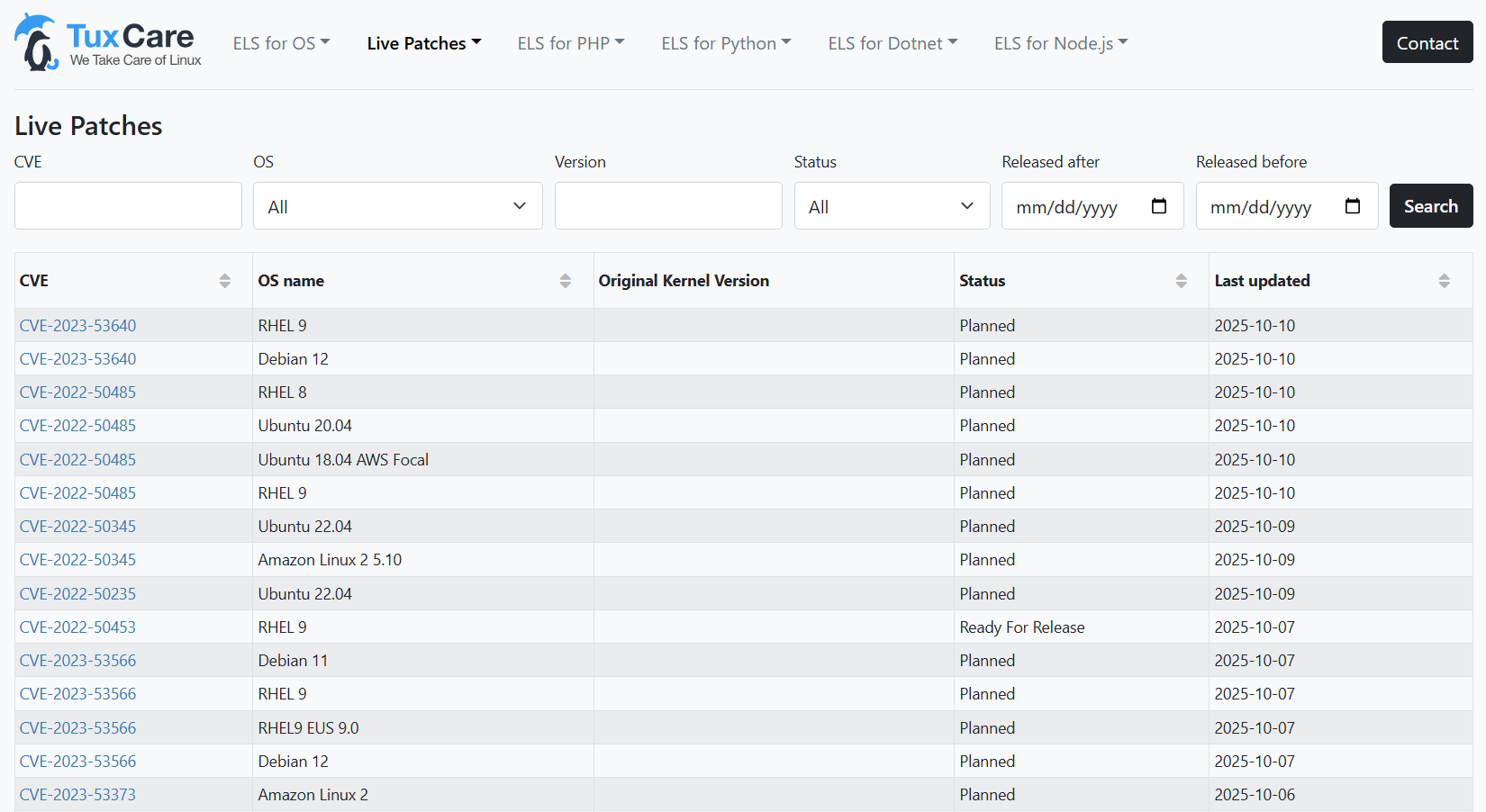
You can visit the CVE dashboard to see all the supported distributions, track Linux kernel vulnerabilities, and view their rebootless patch status across each distribution.
3. Manage Configurations and Compliance
Misconfigurations are the leading cause of cloud data exposure. Adhering to Cloud Security Standards during configuration and change control processes can significantly reduce the chances of such issues.
- Conduct automated configuration scans using Cloud Security Posture Management (CSPM) tools and industry benchmarks (like CIS).
- Implement real-time automated verification of configuration changes to prevent “drift” from security policies.
- Validate defenses with periodic penetration tests and red team exercises.
4. Secure the Entire Software Supply Chain
Modern workloads rely on open-source libraries and APIs, making the supply chain a major attack surface, especially for containerized environments.
- Maintain an inventory of all dependencies using Software Composition Analysis (SCA) and develop a Software Bill of Materials (SBOM).
- Implement code signing and continuous vulnerability scanning within CI/CD pipelines (DevSecOps).
- Prioritize securing container registries and ensuring all images are verified before deployment.
5. Implement Robust Data Protection, Encryption, and DLP
Protecting sensitive data from unauthorized access or exfiltration is paramount.
- Enforce encryption-at-rest (storage, databases) and encryption-in-transit (TLS/SSL).
- Deploy Data Loss Prevention (DLP) tools to monitor and block the movement of sensitive data outside approved boundaries.
- Ensure data residency and compliance requirements (e.g., GDPR, CCPA) are met through proper regional cloud service configuration.
6. Centralize Cloud Logging, Monitoring, and Observability
Limited visibility delays detection and response. A centralized strategy is necessary for multi-cloud and complex environments.
- Centralize logging, metrics, tracing, and alerting across all cloud assets using SIEM or SOAR platforms.
- Deploy Web Application Firewalls (WAFs) and cloud-native network observability tools to monitor traffic for suspicious activity.
- Use advanced tools to correlate security events and gain a deep understanding of the system’s internal state (observability).
7. Prioritize Risk and Integrate Threat Intelligence
Security efforts should be guided by business impact and current threats.
- Perform business impact analyses to identify critical assets and prioritize security investments accordingly.
- Participate in cybersecurity information-sharing groups to stay updated on attacker tactics, techniques, and procedures (TTPs).
- Proactively model potential attacks to continuously refine your defensive and incident response playbooks.
Note: The dynamic nature of the cloud means that new risks continuously emerge, and older threats evolve. Effective protection depends on proactive monitoring, automation, and continuous security improvement.
Protect Against Linux Vulnerabilities with Rebootless Patching
Rebootless patching allows security patches to be applied to running software systems without the need for system restarts or downtime. This can help to reduce the risk of vulnerabilities being exploited by attackers, as patches can be applied quickly and without disruptions. For cloud systems based on open-source components, maintaining maximum security is just as vital, especially as these tools power much of today’s infrastructure.
TuxCare’s KernelCare Enterprise can help organizations streamline vulnerability management quickly. With KernelCare Enterprise, systems can not only be patched without disruptions or maintenance windows – but they can receive updates automatically, greatly reducing your team’s patching-related workload.
Learn more about how rebootless patching works with KernelCare.