
 Tech Support
 Documentation
 Login
 Contact Us

Continue to receive timely and reliable security updates for AngularJS vulnerabilities for as many years as you need.


Endless Lifecycle Support for AngularJS
Security patches for AngularJS, long after Google ended support in 2021
Supported versions:
1.5.x 1.6.x 1.7.x and 1.8.x
CVE fixes for AngularJS 1.5.x, 1.6.x, 1.7.x, and 1.8.x. Keep legacy AngularJS applications secure without the breaking changes and full rewrite required to migrate to modern Angular.
TuxCare has successfully resolved more than 14,000 CVEs in open-source products to date (and counting), ensuring robust security and compliance for enterprise systems.


Get a Quote
Request tailored pricing for your specific environment.
 TuxCare keeps you ahead of threats by proactively tracking and patching new CVEs impacting AngularJS. View all security fixes available to date here.
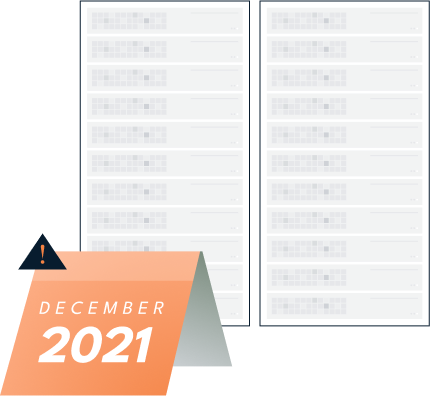
AngularJS 1.8.3, the final framework version, reached the end of support on December 31, 2021.
This means it no longer receives security updates from Google.
- Upgrading from AngularJS 1.8.3 to Angular is a major architectural and technical shift. While beneficial long term, it can introduce significant pain points for many organizations.
- The shift to a component-based architecture, TypeScript adoption, and entirely new APIs can introduce steep learning curves, major compatibility issues, and the need to re-architect entire applications.
However, continuing to use unsupported AngularJS versions puts you at risk of security vulnerabilities.
Fortunately, with TuxCare, there is a
secure path forward.
Endless Lifecycle Support (ELS)
for AngularJS enables you to:

Minimize Security Risks

Preserve Compatibility
Avoid code rewrites and keep your AngularJS applications running smoothly while you strategize your upgrade.

Ensure Compliance
Gain 14-day SLAs for security fixes to maintain compliance with standards including PCI DSS, ISO 27001, HIPAA, and others
Maintain Security of Core AngularJS Components
Endless Lifecycle Support for AngularJS delivers continued security support for:
- angular.js
- angular-route.js
- angular-animate.js
- angular-sanitize.js
- angular-aria.js
- angular-touch.js
- angular-messages.js
- angular-cookies.js
- angular-resource.js
- angular-loader.js
If It's Open Source
and Not on Our List,
We're Ready to
Support It. Just Ask.
We’ve Been Powering Enterprise-Grade Patching At
Unprecedented Scale – and We're Just Getting Started

2,700+
Enterprise Clients

70,000+Packages Curated

420,000+
Patches Delivered

14,000+
Vulnerabilities Fixed

11,000+
Kernels Supported

70+
Linux Distro Versions Supported
Why TuxCare?
15 years of proven excellence in open-source patching have created highly
automated processes and systems, providing:
Extensive Coverage of Open-Source Technologies
We provide long-term security across your entire stack, supporting a wide and continually expanding set of open-source projects, libraries, and runtimes – all from a single, trusted partner.
Efficiencies in Build Chains and Testing
We utilize advanced automation across CVE discovery, backporting, building, and release workflows to accelerate delivery and ensure the highest possible quality of security patches.
Identification and Patching of Transitive Dependencies
We go beyond surface-level scanning to uncover and fix hidden vulnerabilities deep in your dependency trees, securing the entire software supply chain with precision and scale.
Fast and Consistent Delivery of Patches with Supporting SLAs
Automated pipelines and mature workflows ensure rapid, reliable patch delivery backed by SLAs – giving you confidence in your risk management and compliance posture.
Frequently Asked Questions
CentOS 7 is a free and open-source Linux distribution based on the sources of Red Hat Enterprise Linux (RHEL). It is widely used by enterprises, web hosting companies, and individual developers for its stability and compatibility with RHEL’s robust set of tools and features.
Yes, you can still use CentOS 7, but after June 30, 2024 the vendor-supplied patches stopped arriving. If you don’t migrate your systems to a supported distribution, then your deployed systems won’t stop running, which puts you at risk of a vulnerability exploit. You can even likely deploy new systems using CentOS 7 after the end-of-life date, but any new vulnerabilities that pop up won’t be patched by the vendor. However, if you sign up for Endless Lifecycle Support (ELS) from TuxCare, you can continue to receive patches and use your CentOS 7 systems securely.
The official security support for CentOS 7 from the CentOS Project ended on June 30, 2024. However, with our Endless Lifecycle Support (ELS) service, you can continue to receive security updates and patches beyond that date – enabling your organization to use CentOS 7 until you’re ready to plan and execute a large-scale migration, which shouldn’t be rushed.
With CentOS 7 and CentOS 8 already in their end-of-life phases and no release of CentOS 9, it’s recommended to migrate to another distribution in the long run to benefit from modern features, improvements, and longer security support. However, migrating to a supported distribution can take up to a year for many organizations. Fortunately, our Endless Lifecycle Support (ELS) ensures that you can securely keep using CentOS 7 while you plan a smooth and safe transition.
Choosing a successor to CentOS 7 depends on your specific needs. There are multiple options available, but many organizations seek a free RHEL-compatible distribution, like AlmaLinux, for instance, because it – and others – are very similar to CentOS 7. Also, with the AlmaLinux ELevate tool, you can migrate your CentOS 7 systems to AlmaLinux 9 seamlessly.
Have a question about how ELS works
or want to get a quote?
Long-Term Security After Standard Support Ends
TuxCare ELS continues to deliver enduring security for your distro, language, or software development framework for as many years as your organization requires
 CentOS Stream
Endless Lifecycle Support for CentOS Stream 8
End of life: June 2024You can rely on Endless Lifecycle Support for CentOS Stream 8 to continue receiving security updates for as long as you need – so that you have enough time to migrate to another Linux distribution securely.
Learn More RHEL 7
Endless Lifecycle Support for RHEL 7
End of life: June 2024Secure your RHEL 7 infrastructure beyond the end of life with ELS – an affordable, precision-engineered support solution that delivers ongoing security patches for as long as you need.
Learn More Oracle Linux 7
Endless Lifecycle Support for Oracle Linux 7
End of life: December 2024Give your team plenty of time to upgrade to Oracle Linux 8 or 9 with ELS for Oracle Linux 7, which continues to deliver security patches for as long as you need at a much more affordable cost than an Oracle Premier Support plan.
Learn More .NET 6.0
Endless Lifecycle Support for .NET
End of life: November 2024Keep using .NET 6 while continuing to receive security updates on both Windows and Linux, for as many years as you need, so your .NET applications remain secure, stable, and compatible until you’re ready to upgrade.
Learn More Angular
Endless Lifecycle Support for Angular
End of life: Varies for different versionsNeed more time for a safe and smooth upgrade to the latest Angular version? With ELS from TuxCare, you can maintain the security, stability, and compatibility of your existing Angular applications for as many years as you need.
Learn More Apache Tomcat
Endless Lifecycle Support for Apache Tomcat
End of life: March 2024Ensure your Apache Tomcat deployment stays protected without security risks or compatibility concerns. With ELS, you can continue using end-of-life Apache Tomcat versions with confidence for as long as you need.
Learn More CentOS 6
Endless Lifecycle Support for CentOS 6
End of life: December 2020TuxCare’s Endless Lifecycle Support gives you the same official security patches you used to get with CentOS 6, and we’ll continue to provide you with ongoing security support for as many years as you need.
Learn More
CentOS 7
Endless Lifecycle Support for CentOS 7
End of life: June 2024CentOS 7 is going end of life in June 2024, but you can enjoy ongoing security updates for as long as you need with our Extended Lifecycle Support – buying time to plan your migration, while keeping your workload safe.
Learn More
RHEL 7
Endless Lifecycle Support for RHEL 7
End of life: June 2024Secure your RHEL 7 infrastructure beyond the end of life with ELS – an affordable, precision-engineered support solution that delivers ongoing security patches for as long as you need.
Learn More
RHEL 7
Endless Lifecycle Support for RHEL 7
End of life: June 2024Secure your RHEL 7 infrastructure beyond the end of life with ELS – an affordable, precision-engineered support solution that delivers ongoing security patches for as long as you need.
Learn More OpenJDK
Endless Lifecycle Support for OpenJDK
End of life:Keep your Java workloads secure on an out-of-support OpenJDK version – skipping the grind of full QA retest cycles and upgrade-induced breaking changes.
Learn More
Oracle Linux 6
Endless Lifecycle Support for Oracle Linux 6
End of life: March 2021TuxCare will deliver Extended Lifecycle Support for Oracle Linux 6 for as many years as you need, saving you significantly on costs compared to Oracle Linux Premier Support while providing the same vulnerability coverage.
Learn More PHP
Endless Lifecycle Support for PHP
End of life:Buy yourself and your organization time to develop new production code while receiving ongoing security patches for out-of-support PHP versions with Endless Lifecycle Support to maintain the safety of your systems.
Learn More Python
Endless Lifecycle Support for Python 2.x
End of life: January 2020Python Extended Lifecycle Service from TuxCare breathes new life into code written for Python 2.7 so you can continue using your existing software on AlmaLinux, Rocky, or Red Hat Enterprise Linux 9 as before.
Learn More Ubuntu 16.04
Endless Lifecycle Support for Ubuntu 16.04
End of life: April 2021Save on costs compared to Ubuntu Pro for Ubuntu 16.04 when you choose TuxCare Endless Lifecycle Support for ongoing security maintenance, which will keep you protected for as many years as you need beyond the end-of-life date.
Learn More
Ubuntu 18.04
Endless Lifecycle Support for Ubuntu 18.04
End of life: June 2023Choose TuxCare for Ubuntu 18.04 endless support and save significantly over an Ubuntu Pro subscription from Canonical, with security updates for your Ubuntu workloads lasting as long as you need.
Learn More
Ubuntu 20.04
Endless Lifecycle Support for Ubuntu 20.04
End of life: End of Life: May 2025Continue safely working with Ubuntu 20.04 for as many years as you’d like, with TuxCare delivering ongoing security updates to protect your systems for as long as your organization needs.
Learn More
CentOS 8
Extended Lifecycle Support for CentOS 8
End of life: December 2021All the way through January 2026, you can rely on TuxCare for Extended Lifecycle Support to cover security updates for your CentOS 8 Linux distribution – so that you have enough time to migrate to another distro.
Learn More
RHEL 7
Endless Lifecycle Support for RHEL 7
End of life: June 2024Secure your RHEL 7 infrastructure beyond the end of life with ELS – an affordable, precision-engineered support solution that delivers ongoing security patches for as long as you need.
Learn More