
 Tech Support
 Documentation
 Login
 Contact Us


Go straight to an AI summary of this blog post instead 


Key Takeaways
- Software flaws and hardware bugs create permanent doorways for attackers.
- Successful vulnerability management is built on risk-based prioritization – not just chasing raw CVSS scores.
- TuxCare Radar slashes false positives using AI-driven scoring to highlight the risks that actually threaten your specific environment.
Networks are living organisms. Systems join the fold, code evolves, and user permissions shift daily. This fluidity requires vulnerability management to operate as a round-the-clock heartbeat rather than a quarterly check-up. While standard scanning identifies flaws and generates reports, the “dead space” created by patch delays and alert fatigue often leaves the most critical risks wide open.
Modern vulnerability management solutions have emerged to bridge this gap. These tools go beyond mere scanning; they suggest surgical remediation efforts, moving your team from a defensive, reactive crouch to a proactive security posture.
This guide breaks down how vulnerability management functions in 2026 and how Linux-heavy teams can neutralize risk without killing their uptime.
What Is Vulnerability Management?
Hackers aren’t always geniuses; they’re often just efficient. They look for the path of least resistance – unpatched browsers, aging web apps, or flaws in third-party libraries. Vulnerability management is the art and science of finding and closing those paths before they are discovered by the wrong people.
It is a continuous lifecycle of identifying, evaluating, and neutralizing security weaknesses. Unlike a “one-and-done” assessment, vulnerability management is persistent. It monitors new CVEs, identifies which of your specific systems are susceptible, and ranks them by real-world risk.
It’s also important to distinguish this from patch management. While patch management handles the “how” (applying the update), vulnerability management handles the “why” and “when,” ensuring your team isn’t wasting time on low-impact fixes.
Why Vulnerability Management Matters in 2026
Back in the 90s, a few dozen vulnerabilities a year made headlines. In 2026, we are staring down the barrel of nearly 40,000 annual reports. In January of this year alone, over 2,800 new CVEs were logged.
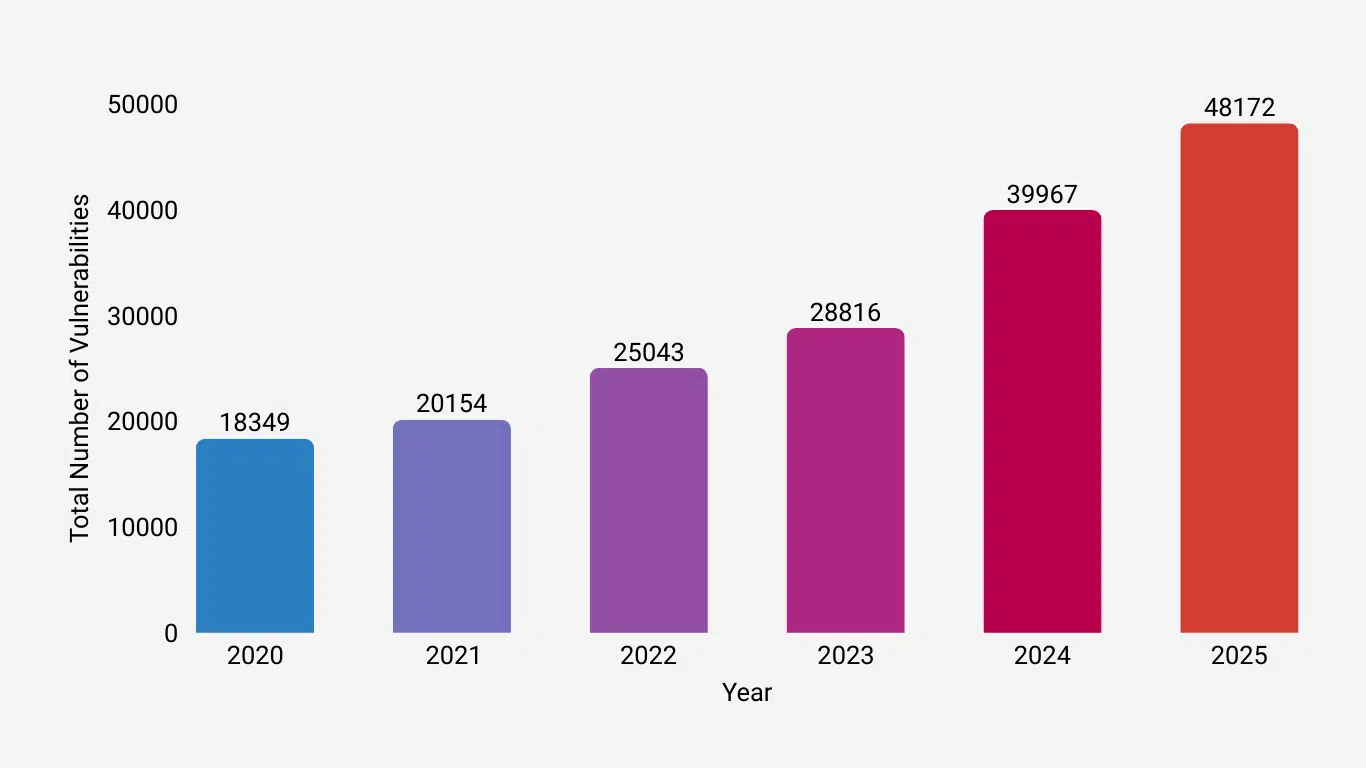
You cannot outrun this volume manually. Automated vulnerability management is the only way to filter the signal from the noise through effective vulnerability reporting, ensuring that your limited human hours are spent on threats that are actually exploitable.
Beyond pure security, robust vulnerability management streamlines compliance and protects your most valuable asset: uptime. When you understand the context of a bug, you can patch with purpose rather than rebooting every server for a minor glitch that wasn’t even reachable from the internet.
What’s Changed in Vulnerability Management in 2026
In the “old days,” a sysadmin could look at a report and manually triage fixes. Today, that’s a recipe for burnout. The primary shift in 2026 is the integration of AI-assisted tools that reduce “noise.” These tools analyze exploitability in the wild, allowing security teams to respond to a breach before it even starts. Effective vulnerability management now focuses on closing the window of opportunity for threat actors through configuration changes or rapid patching.
Vulnerability Management vs. Vulnerability Assessment
Think of a vulnerability assessment as a snapshot: it tells you a window is unlocked at 3:00 PM. Vulnerability management is the entire security system – it knows who has the keys, monitors the perimeter 24/7, and alerts the guards the moment a shadow moves.
|
Aspect |
Vulnerability Assessment |
Vulnerability Management |
|
Scope |
Periodic/Point-in-time |
Continuous lifecycle |
|
Focus |
Identifying flaws |
Contextual risk reduction |
|
Asset Context |
Agnostic (treats all the same) |
Prioritizes mission-critical assets |
|
Automation |
Scheduled triggers |
Automated discovery & remediation |
|
Output |
Static report or PDF |
Real-time visibility and remediation tracking |
|
Goal |
Visibility & Compliance |
Real-world risk mitigation |
The Vulnerability Management Process
Vulnerability management is a structured, repeatable cycle. It ensures that vulnerabilities are not only discovered but also prioritized and remediated effectively. The process helps teams stay on top of threats while minimizing disruption to operations.
To be effective, your vulnerability management must be a repeatable, structured cycle:

- Asset Discovery: You can’t protect a ghost. Identify every device and service on your net.
- Vulnerability Detection: Continuous scanning for flaws, focusing on Linux kernels and cloud configs.
- Risk-Based Prioritization: Rank issues by exploitability. Pro Tip: A “Medium” score with a known public exploit is more dangerous than a “High” score with no known exploit.
- Remediation & Patching: Use rebootless tools to apply fixes without service interruptions.
- Verification: Re-scan to ensure the fix actually “took.”
- Reporting: Document everything to refine your vulnerability management strategy over time.
Key Vulnerability Management Metrics
Tracking metrics helps teams measure the effectiveness of your vulnerability management program. Vulnerability metrics reveal where processes are working and where improvements are needed.
Long story short – if you don’t measure it, you can’t improve it. Watch these KPIs:
|
Metric |
What it measures |
Why it matters |
|
Mean Time to Remediate (MTTR) |
Time from discovery to fix |
Shorter MTTR means faster risk reduction |
|
Patch Delay Window |
Time between disclosure and patch application |
Smaller windows reduce exposure |
|
Exploitable Vulnerability Percentage |
Portion of security flaws with known exploits |
Helps teams focus on real-world risk |
|
Coverage Rate |
% of assets scanned and monitored |
Ensures no blind spots |
|
False Positive Rate |
% of flagged vulnerabilities that are not real |
Reduces wasted time and improves accuracy |
|
Reboot-Required vs. Rebootless Patches |
Count of patches that require downtime |
Helps maintain uptime and reduce disruption |
Pro Tip: Choosing the right tools will help you run more efficient vulnerability management operations – ensuring tighter security, while also minimizing the drain on your staff, all while helping you better assess vulnerability metrics that can guide your decisions. To evaluate leading market options for your team, you can review our breakdown of the best vulnerability management service providers.
The Capabilities You Will Commonly Find in Vulnerability Management Tools
A robust vulnerability management solution should automate three primary goals: detecting flaws across your attack surface, prioritizing those flaws through risk-based reporting, and remediating them to reduce manual overhead. While one tool may not do it all, a complete vulnerability management stack should include these essential features:
We provide an example listing of capabilities you should be looking for and you’re unlikely to find all of the following capabilities in a single vulnerability management tool. However, once you have a set of tools that cover your environment you should find that you’re covered for most of the following features:
Dynamic Asset Inventory: You can’t secure what you can’t see. Your tools must automatically discover and track devices, services, and cloud assets.
Comprehensive Scanning: Whether on-host or network-wide, the system must scan endpoints, servers, and applications to generate actionable threat reports.
Patch Enumeration: Advanced vulnerability management software identifies current software versions and precisely outlines which patches are missing to bring systems up to date.
Verification & Validation: Automated workflows should confirm that a fix was successful through follow-up scans and integration with testing tools.
Workflow Automation: Look for tools that turn findings into action by automatically generating tickets and assigning remediation tasks to sysadmins.
Centralized Tracking & Logging: To manage the high volume of modern CVEs, you need a single pane of glass to monitor progress, log actions, and audit your security posture.
How TuxCare Supports Modern Vulnerability Management
TuxCare helps enterprise security teams detect, prioritize, and fix vulnerabilities faster in Linux environments and open-source stacks in general. Its vulnerability management solutions work together to close the gap between discovery and remediation.
1. TuxCare Radar
Traditional scanners often flag vulnerabilities that have already been fixed but still appear “vulnerable” in package metadata. Radar is patch-aware, so it knows what has already been fixed through advanced patching tools such as rebootless patching and ELS. This reduces false positives, lowers alert fatigue, and provides an accurate, audit-ready view of real exposure. Radar also uses AI-assisted risk scoring to help teams prioritize vulnerabilities that are most likely to be exploited in real-world scenarios.
2. KernelCare
KernelCare provides automated, rebootless kernel patching for Linux distributions without requiring reboots. Organizations can apply critical updates immediately, maintaining security while minimizing downtime.
3. LibCare
LibCare is an add-on tool to KernelCare that extends rebootless patching to shared libraries such as glibc and OpenSSL. This ensures vulnerabilities in core libraries are addressed without service disruption.
4. Endless Lifecycle Support (ELS)
Vulnerability management is hardest when it comes to systems that no longer receive official security updates. TuxCare’s Endless Lifecycle Support (ELS) provides ongoing vulnerability patches for end-of-life Linux distributions, language runtimes, and libraries.
These include CentOS, Ubuntu, RHEL, Python, PHP, OpenJDK, PostgreSQL, and many more. Organizations can maintain security and compliance on legacy infrastructure while planning a migration on their own timeline.
Best Practices for Effective Vulnerability Management
Implementing vulnerability management effectively requires more than tools – it requires consistent habits and clear processes.
Continuous over Periodic: Abandon the “Tuesday scan” for real-time monitoring.
Context is King: Use threat intelligence to decide what to fix at 2:00 AM vs. Monday morning.
Getting this right starts with a solid vulnerability prioritization framework – learn the key steps and factors in our in-depth guide.
Rebootless Patching: Make security invisible to the end user by patching the kernel while it runs.
Avoiding Common Vulnerability Management Pitfalls
Even with the right tools and processes, vulnerability management can fail sometimes due to common mistakes.
- The “CVSS-Only” Trap: Treating every “High” score as a priority, regardless of whether the system is internet-facing or if an exploit exists.
- Reboot Paralysis: Delaying critical kernel patches for months because the business cannot afford downtime.
- EOL Blind Spots: Continuing to run end-of-life software after end dates without updates.
To avoid these issues, it’s important to understand where vulnerability management efforts break down in practice. We cover these problems in detail in our dedicated guide on 8 common vulnerability management mistakes Linux sysadmins make, along with practical ways to avoid them.
Reduce Risk and Eliminate Patch Delays with TuxCare
In 2026, effective vulnerability management depends on speed and focus. To stay ahead of automated threats, teams must move beyond manual cycles and embrace a model where discovery and remediation happen in near-real-time.
TuxCare removes the traditional barrier between security and uptime – so critical patching no longer causes downtime. With Radar scanning vulnerabilities and KernelCare handling remediation, teams can close vulnerabilities faster while keeping systems online. This helps organizations shrink exposure windows and focus on innovation instead of maintenance.
Ready to modernize your Linux vulnerability management? Explore TuxCare’s rebootless patching solutions or dive deeper into our guides on Linux Security Best Practices.

