
 Tech Support
 Documentation
 Login
 Contact Us


Go straight to an AI summary of this blog post instead 


Key Takeaways
- TuxCare Radar: Best for Linux-focused teams that need accurate vulnerability scanning with minimal false positives and clear remediation guidance.
- Tenable Nessus / Qualys VM: Strong choices for enterprises managing mixed OS environments that need broad coverage and compliance reporting.
- Rapid7 InsightVM: Suitable for organizations that prioritize risk-based scoring and integration with remediation workflows.
- OpenVAS / Wiz: OpenVAS fits teams that want customizable, open-source scanning, while Wiz is ideal for cloud-first environments needing high-level visibility.
Vulnerability scanning is a core part of modern Linux security and most organizations rely on vulnerability scanning tools to identify known CVEs, assess risk, and guide patching decisions. However, these tools can sometimes generate more problems than they solve. Scan results often include false positives, for example, a scanning tool reporting a vulnerability even if it does not actually exist in the system or pose a risk.
This article looks at what today’s top vulnerability scanning tools do well – and where they fall short – in Linux environments. It compares common approaches, highlights tradeoffs, and explains what IT and security teams should consider when choosing a vulnerability scanner.
Top Vulnerability Scanning Tools: Overview
Linux teams have no shortage of vulnerability scanning tools to choose from. Most scanners promise cross-platform support, broad package coverage, automated discovery, and centralized reporting. On paper, many of these tools look similar. In practice, their differences become clear only when they are used against real Linux systems.
The table below provides a quick comparison of widely used tools, including both commercial and open-source options.
|
Tool |
Primary Use Case |
Pricing Model |
|
TuxCare Radar |
Linux-first vulnerability scanning for enterprises |
Commercial subscription |
|
Tenable Nessus |
Enterprise vulnerability scanning across mixed OS environments |
Commercial subscription |
|
Qualys Vulnerability Management |
Cloud-based vulnerability management for large-scale enterprises |
Commercial subscription |
|
OpenVAS |
Open-source vulnerability scanning for IT teams |
Open-source |
|
Rapid7 InsightVM |
Risk-based vulnerability management for mixed environments |
Commercial subscription |
|
Wiz |
Cloud-first vulnerability scanning for hybrid environments |
Commercial subscription |
1. TuxCare Radar
TuxCare Radar is a vulnerability scanning tool built specifically for Linux environments. It currently supports multiple enterprise Linux distributions, including RHEL, CentOS, AlmaLinux, Ubuntu, and Debian. Radar assesses the actual risk a vulnerability poses by analyzing CVSS scores, patch availability, exploitability, and real‑world threat context.
This approach helps teams understand which issues actually affect their systems. Radar also integrates with other TuxCare solutions, such as KernelCare for rebootless patching and Endless Lifecycle Support, to align vulnerability detection with remediation workflows.
What It Does Well
- Contextual risk scoring: Ranks security vulnerabilities based on exploitability and real-world risk, not just CVSS scores to minimize false positives.
- Actionable remediation guidance: Connects findings to practical steps, helping teams resolve issues faster.
- Patch‑aware detection: Recognizes whether vulnerabilities are already fixed by KernelCare live patches or Endless Lifecycle Support (ELS).
- Audit‑ready reporting: Exportable reports in formats like PDF and Excel to support audit reviews and compliance requirements.
Where It Falls Short
- Linux-only focus: Designed for Linux systems and does not cover Windows or macOS environments.
- Limited support: Requires other scanning tools in mixed-OS environments.
Who the Tool is Best For
- Linux infrastructure teams that need accurate CVE scanning with minimal false positives
- Security operations groups focused on prioritizing real risk over volume
- Enterprises seeking closer integration between scanning results and patching workflows
2. Tenable Nessus
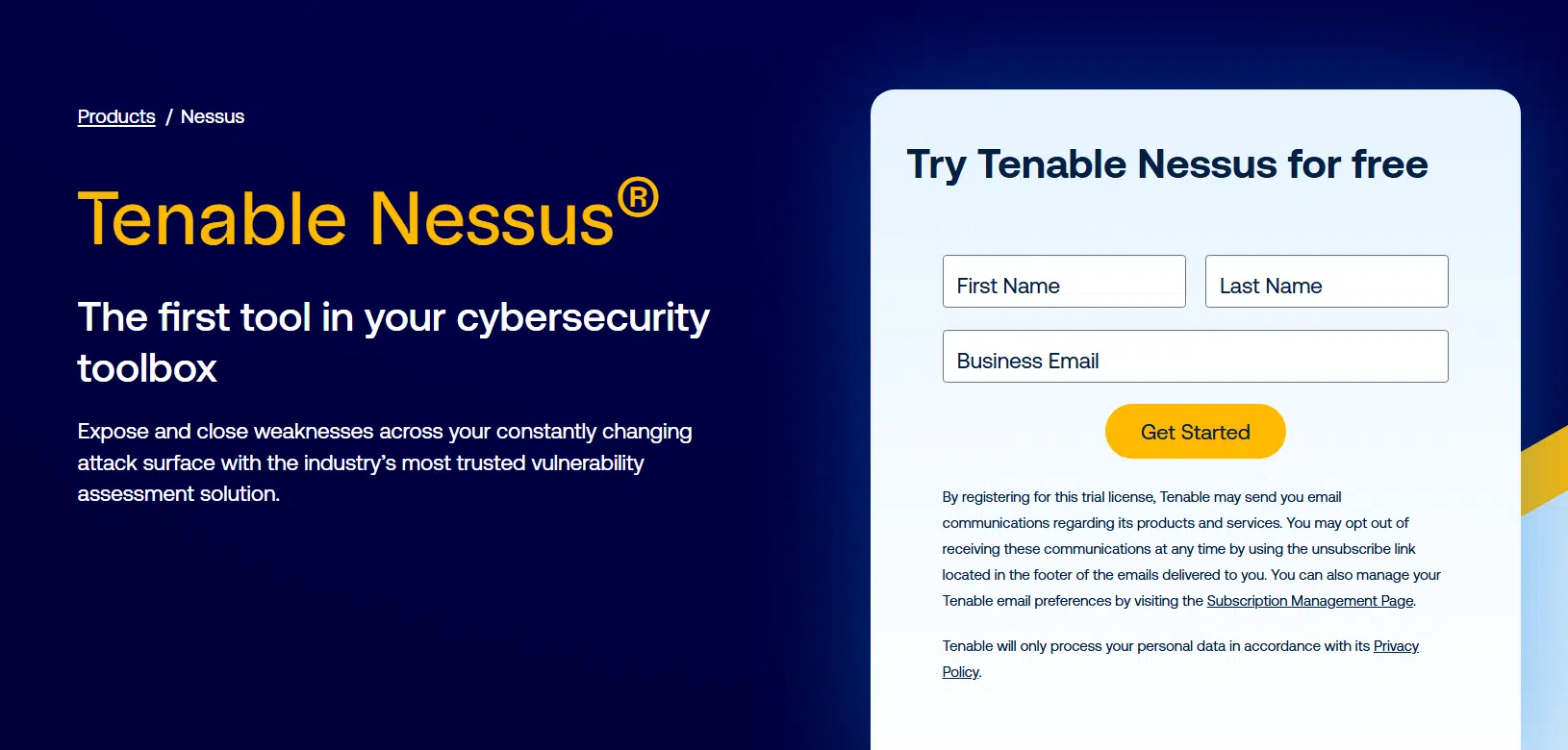
Tenable Nessus is one of the most widely adopted commercial vulnerability scanners in enterprise IT. It supports a broad range of operating systems, applications, and network devices, making it well suited for organizations managing mixed environments. Nessus uses a plugin-based detection engine with regularly updated checks to identify known vulnerabilities, misconfigurations, and compliance gaps. Its reporting and compliance features make it popular for teams that need audit-ready results alongside regular vulnerability management.
What It Does Well
- Broad CVE Coverage: Scans operating systems, applications, and networked devices across diverse environments.
- Compliance-ready reporting: Provides pre-built templates for PCI DSS, CIS benchmarks, and other regulatory standards.
- Mature scanning engine: Well-tested, widely adopted, and supported by a large plugin ecosystem.
- Flexible deployment: Supports agent-based and network-based scanning, along with scheduled vulnerability scans.
Where It Falls Short
- False positives on Linux: May flag vulnerabilities that are already patched in backported packages.
- Limited in Linux context: Does not fully account for kernel nuances or active code path exposure.
- Resource-intensive: Larger scans can consume significant CPU/memory, especially on complex networks.
Who the Tool is Best For
- Enterprises managing mixed OS environments with both Linux and Windows assets
- Security teams that require compliance-focused reporting
- Organizations looking for a mature, widely-supported scanning platform
3. Qualys Vulnerability Management
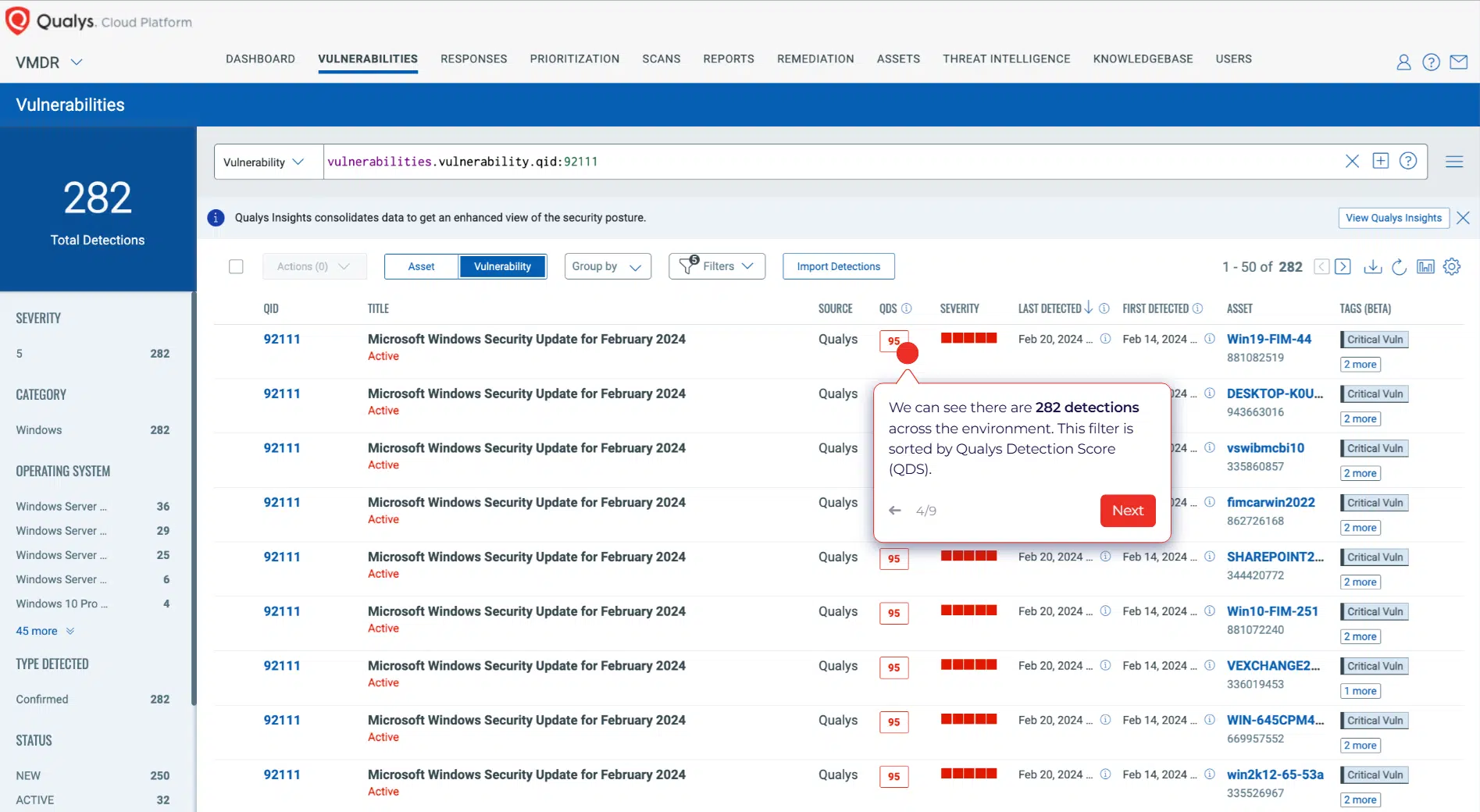
Qualys Vulnerability Management (VM) is a cloud-based platform designed to provide continuous vulnerability assessment across enterprise IT environments. It supports both agent-based and agentless scanning for on-premises and cloud workloads, with dashboards that centralize asset visibility, risk insights, and compliance reporting. While it covers a broad range of operating systems and applications, its strength lies in visibility and reporting at scale rather than deep Linux-specific analysis.
What It Does Well
- Cloud-based visibility: Provides centralized dashboards for large-scale, multi-location environments.
- Flexible scanning options: Supports both agent-based and agentless approaches for hybrid infrastructure.
- Compliance-focused reporting: Includes pre-built templates for regulatory standards.
- Scalable reporting: Generates reports suitable for both technical teams and executive stakeholders.
Where It Falls Short
- Less Linux depth: Focuses on general CVE detection; lacks detailed insight into kernel and package-level nuances.
- Potential false positives: Detection methods may not fully account for backported patches or distribution-specific fixes.
- Generic remediation guidance: Provides recommendations, but often lacks detailed, Linux-specific patching context.
Who the Tool Is Best For
- Enterprises with large-scale or hybrid IT environments
- Security managers who need centralized reporting and dashboards
- Organizations prioritizing compliance and executive visibility over deep Linux-specific insights
4. OpenVAS
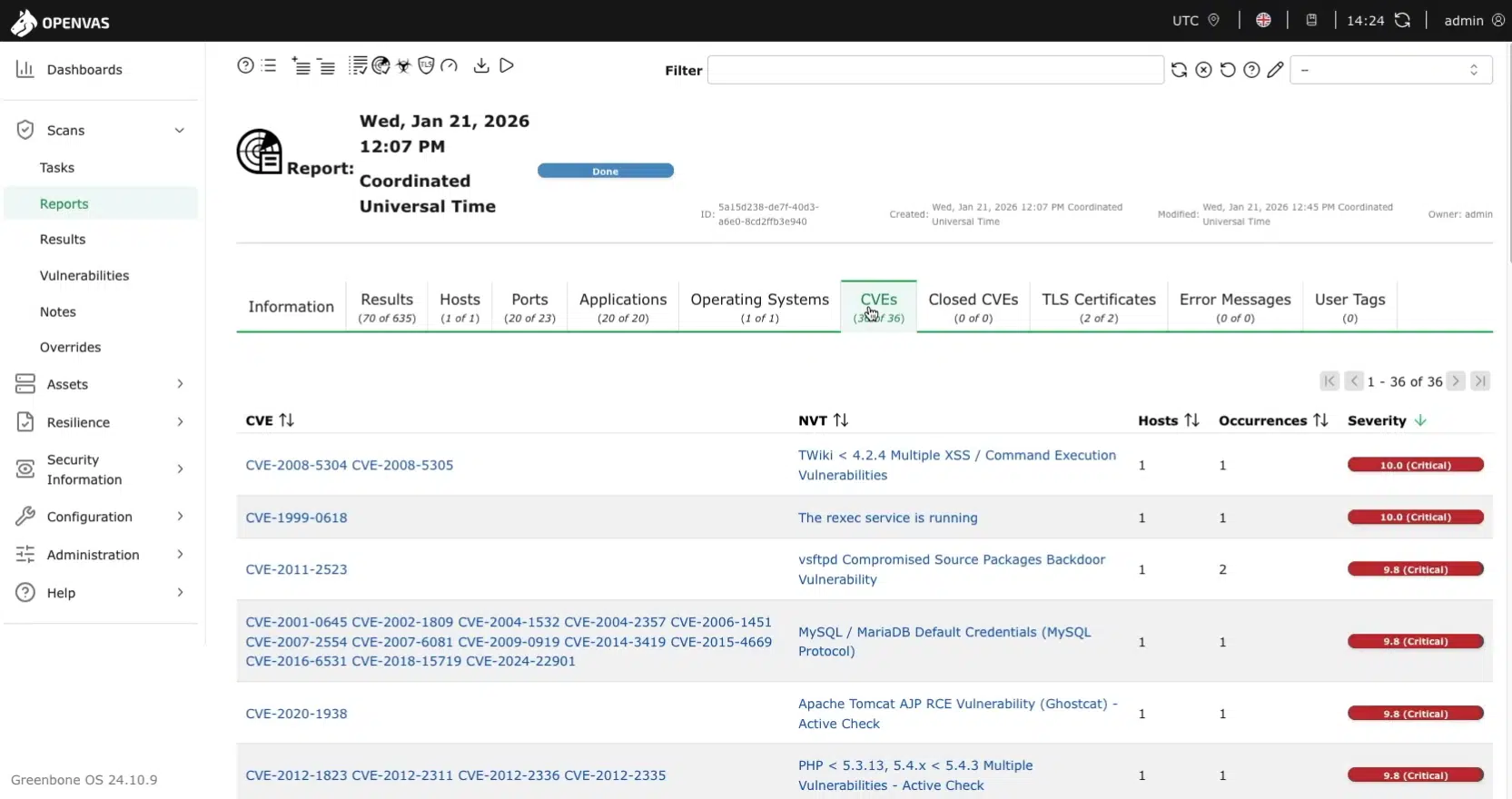
OpenVAS (part of Greenbone Vulnerability Management, GVM) is a widely used open-source vulnerability scanner. It provides network and system-level scanning for Linux environments and other operating systems. OpenVAS relies on a system of Network Vulnerability Tests (NVTs), which are regularly updated through Greenbone’s vulnerability feeds to detect known issues across hosts. Its flexibility and customizability make it a popular choice for teams that want control over scanning policies and reporting, though it requires more setup and maintenance than most commercial tools.
What It Does Well
- Open-source and free: No licensing costs; ideal for budget-conscious organizations.
- Highly customizable scans: Allows fine control over scan policies, targets, and thresholds.
- Broad vulnerability coverage: Regularly updated feeds help detect known vulnerabilities across systems.
- Flexible reporting: Supports multiple formats (PDF, HTML, CSV) and can be integrated into dashboards or scripts.
Where It Falls Short
- Setup and maintenance overhead: Requires expertise to configure and tune effectively, especially in Linux environments.
- False positives possible: Less intelligent prioritization may produce noise in environments with backported patches.
- Performance at scale: Can become resource-intensive when scanning large or complex environments.
Who the Tool Is Best For
- IT teams or Linux sysadmins seeking free, open-source vulnerability scanning
- Organizations that want customizable scan configurations tailored to their environment
- Security teams comfortable with manual tuning and interpretation of results
You can also learn more about open-source vulnerability scanners in our in-depth guide.
5. Rapid7 InsightVM

Rapid7 InsightVM (formerly Nexpose) is a commercial vulnerability scanner that emphasizes risk-based prioritization and integration with remediation workflows. It supports both agent-based and network-based scanning, covering Linux servers alongside Windows, cloud, and containerized environments. InsightVM focuses on helping teams move from detection to remediation, with dashboards and reporting that support both technical users and security leadership.
What It Does Well
- Risk-based prioritization: Uses contextual scoring based on exploitability, asset importance, and real-world threat data.
- Remediation workflow integration: Connects scan results with ticketing and remediation processes.
- Flexible deployment: Supports both agent-based and network-based scanning across environments.
- Scalable dashboards: Provides visibility for both technical teams and management-level reporting.
Where It Falls Short
- Limited Linux-specific depth: Multi-platform focus means kernel and package-level nuances may not always be fully captured.
- Complexity at scale: Advanced features and workflows can require time and training to use effectively.
- Commercial pricing: May be cost-prohibitive for smaller or Linux-only teams.
Who the Tool Is Best For
- Security teams managing mixed OS and cloud environments
- Organizations that need risk-based prioritization and remediation guidance
- Enterprises looking for integration between scanning and patching workflows
6. Wiz
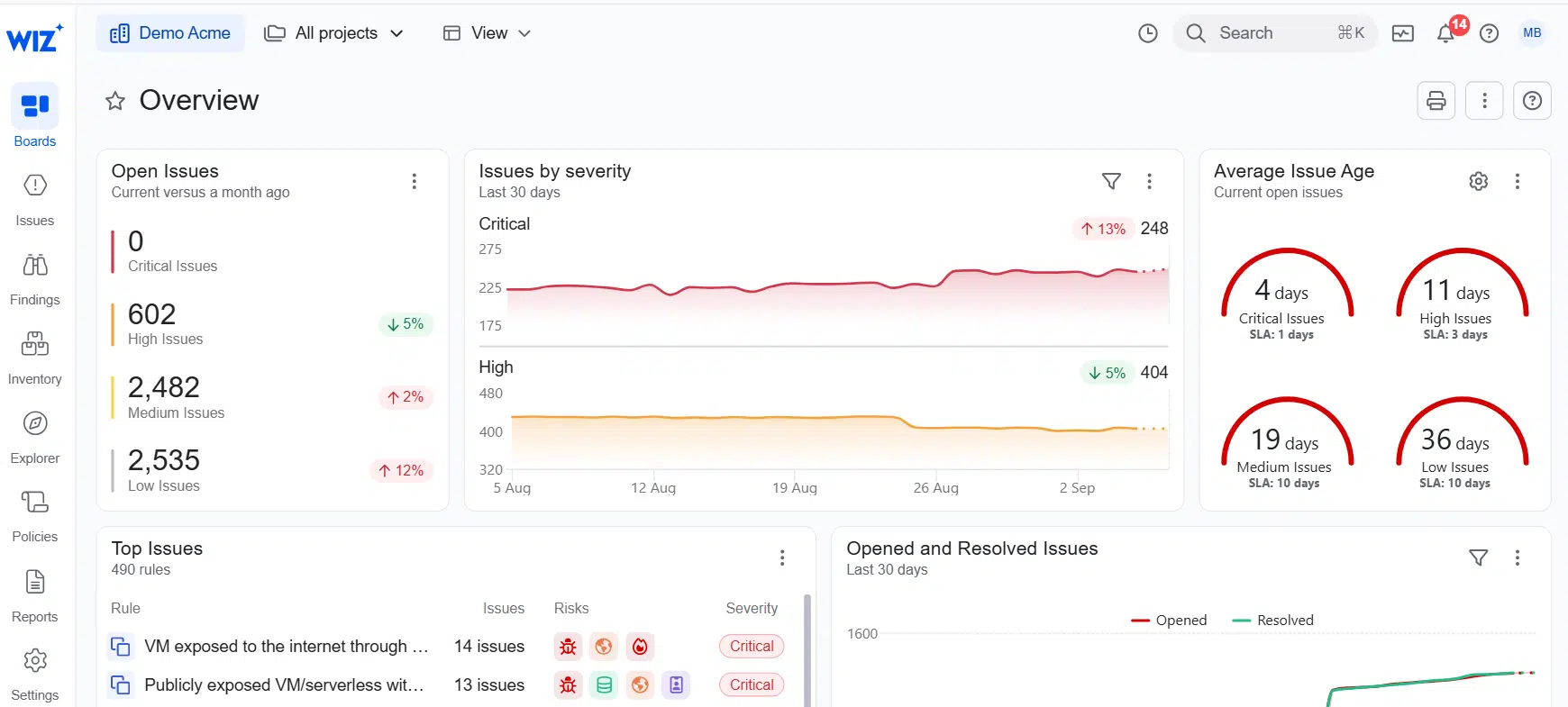
Wiz is a cloud-native security platform designed for hybrid and multi-cloud environments. It uses agentless, API-based scanning to discover workloads, containers, and cloud resources, identifying vulnerabilities, misconfigurations, and risk exposure across cloud infrastructure. While Wiz supports Linux workloads in cloud environments, it is not designed for deep OS-level analysis such as kernel or package-specific CVEs. It is best suited for teams that need broad visibility across modern, cloud-native environments.
What It Does Well
- Agentless cloud scanning: Quickly assesses cloud workloads without requiring agents, making deployment fast and low overhead.
- Broad cloud coverage: Detects vulnerabilities, misconfigurations, identity risks, and container issues across cloud environments.
- Risk prioritization and attack path analysis: Highlights critical exposures by mapping how vulnerabilities can be exploited in real-world scenarios.
- DevSecOps integration: Works with CI/CD pipelines to surface risks earlier in the development lifecycle.
Where It Falls Short
- Limited OS-level depth: Not designed for detailed kernel or package-level vulnerability analysis.
- Cloud-focused approach: Less suitable for traditional on-prem Linux environments.
- Limited OS-level remediation guidance: Focuses on cloud risk and configuration issues rather than detailed Linux patching workflows.
Who the Tool Is Best For
- Cloud security and DevSecOps teams managing hybrid or multi-cloud environments
- Enterprises that need visibility across cloud workloads, containers, and identities
- Organizations prioritizing cloud risk posture over deep Linux system-level analysis
How to Choose a Vulnerability Scanning Tool for Linux Environments
Choosing the right vulnerability scanner for Linux systems requires more than comparing CVE counts or scanning speed. A good scanner not only detects vulnerabilities but also provides context, prioritizes real risk, and integrates with patch management workflows. The following criteria highlight what matters most when evaluating vulnerability scanning tools for Linux environments.
Linux Package and Kernel Awareness
Many Linux distributions backport security fixes without changing package versions. A scanner that relies purely on version checks can generate a long list of false positives, which wastes time and erodes confidence in the results. Tools designed specifically for Linux account for patch state, backporting, and kernel dependencies, helping teams focus on vulnerabilities that actually affect their systems.
Meaningful Vulnerability Prioritization
Not all vulnerabilities are equally dangerous. Simply flagging every CVE is unhelpful. Effective scanners consider exploitability, exposed services, and system exposure to identify what matters most. This kind of context-aware scoring helps teams tackle high-risk vulnerabilities first, rather than chasing a long list of low-impact issues.
For a closer look at the key steps and factors involved, see this guide on vulnerability prioritization.
Actionable Remediation Guidance
Detection alone isn’t enough in enterprise settings. Linux teams need clear guidance on how to patch safely, which issues to address first, and the potential impact on system stability. Tools that connect scan results to remediation steps – or integrate with patching workflows – help reduce effort and avoid unnecessary downtime.
Distribution Coverage
Linux environments often include multiple distributions, each with its own quirks. A scanner that cannot accurately handle RHEL, CentOS, AlmaLinux, Ubuntu, Debian, or SUSE will leave gaps in visibility. Evaluating distribution support ensures that scans are reliable across the full environment and prevents surprises during audits.
Reporting and Integration
Teams also need clear, actionable reports and the ability to integrate scan results with SIEMs, ticketing systems, and other security tools. This capability helps streamline workflows and ensures that vulnerability management aligns with broader security and operational processes.
Choosing the Right Scanner for Your Linux Environment
Selecting a vulnerability scanner for Linux is about more than comparing feature lists or CVE counts. Each tool has its strengths and trade-offs, and the best choice depends on your environment, team expertise, and workflow requirements.
TuxCare Radar stands out for teams that need accurate, Linux-first scanning. Its AI-driven risk scoring and awareness of applied patches help reduce false positives. Radar also provides clear remediation guidance, allowing teams to focus on vulnerabilities that have a real impact and address them efficiently.
Watch TuxCare Radar in action and learn what to expect from your first scan!

